Magnetic Snaps vs Metal Snaps for Handbags: Which Closure Should You Use?
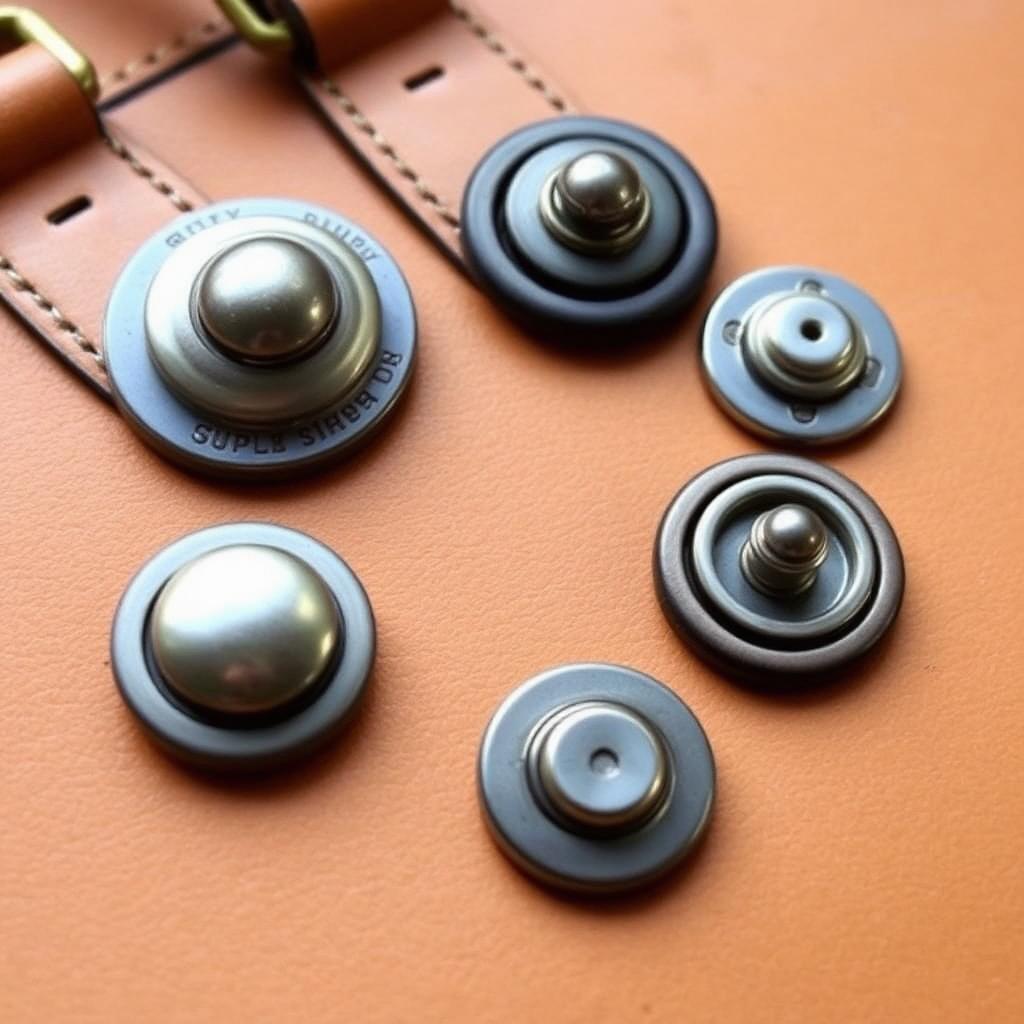
Magnetic snaps and mechanical metal snaps (Line 20, Line 24, spring snaps) both close a flap — but they solve different problems. Magnetic snaps prioritize ease of use; metal snaps prioritize holding strength. This guide covers when each belongs on a handbag, and how to install them cleanly.
What each closure is
Magnetic snap
Two metal discs, each with an embedded rare-earth (neodymium) or ferrite magnet. Prongs or a screw-back secures each half to the leather. Opens with a light pull; closes automatically when the two halves come near each other.
Metal snap (Line 20 / Line 24 / spring snap)
Four-part mechanical fastener: a cap and post on the outside, a socket and stud on the inside. Requires enough force to unseat the stud from the socket — described in depth in our spring snaps vs line snaps comparison.
Holding strength
| Closure | Approx. holding force | Failure mode |
|---|---|---|
| 14mm magnetic snap (standard) | ~1.5–2 kg pull | Slides open under vertical load |
| 18mm magnetic snap (heavy) | ~3–4 kg pull | Slides open under vertical load |
| Line 20 metal snap | ~5–7 kg pull | Cap pops or socket wears out |
| Line 24 metal snap | ~8–10 kg pull | Cap pops or socket wears out |
Metal snaps hold roughly 3–5× more force than same-size magnetic snaps. On a bag flap under any real weight (books, laptop, heavy phone), a magnetic snap can peel open.
Ease of use
Magnetic snaps win decisively on user experience:
- Open one-handed with a light tug.
- Self-align when closing — no fumbling.
- Silent (no snap sound).
- No wear on leather at the closure point.
Metal snaps demand two hands, a firm press to close, and produce the characteristic click. Over hundreds of cycles the leather around the cap compresses and can develop a "halo" indent.
Use case matrix
| Bag type | Recommended closure | Reason |
|---|---|---|
| Clutch / evening bag | Magnetic snap (14mm) | Light contents, one-hand use matters |
| Crossbody flap bag | Magnetic snap (18mm) OR Line 20 | Depends on load — see below |
| Tote flap | Line 24 metal snap | Heavy contents, high pull load |
| Wallet closure | Line 20 metal snap | Repeated cycles, needs positive feedback |
| Backpack flap | Line 24 or buckle | Weight-bearing, magnets slide open |
| Small pouch / card case | Magnetic snap (12mm) | Light use, thin profile |
| Diaper bag / work tote | Line 24 metal snap | Contents shift, magnetic snap fails under vertical load |
The crossbody rule
Crossbody bags fail magnetic snaps in a specific way: when you sit down and the bag pivots, contents shift downward against the flap. A 14mm magnetic snap will peel open, spilling contents. Either use an 18mm+ magnet or step up to a Line 20 metal snap. Better: use both — magnet for one-hand access, metal snap for security when the flap needs to stay closed.
Installation differences
Magnetic snap installation
- Mark placement on both mating surfaces (use the female half to trace).
- Cut prong slots with a chisel or sharp knife.
- Push prongs through leather from the outside.
- Slide backing washer over prongs.
- Bend prongs flat with pliers.
- Cover the back with a leather patch or lining to hide the washer.
Critical: reinforce thin leather with a stiff interfacing patch behind the snap. Magnetic snap prongs concentrate stress and tear out of unreinforced leather within a few months.
Metal snap installation
Covered in detail in our Line 20 snap installation tutorial. Requires a snap setter kit or press.
Aesthetic considerations
Magnetic snaps are hidden — the outside of the flap shows no hardware. Clean, minimal, modern. Metal snaps show a visible cap on the outside, which becomes a design feature (matched to other hardware) or a distraction (mismatched). For minimalist designs, magnetic is the obvious pick. For heritage or workwear looks, exposed metal snaps read as intentional detail.
Common failure modes
Magnetic snaps
- Prongs tear through thin/soft leather (reinforce with interfacing).
- Magnet weakens over years (rare-earth magnets lose ~1% strength per decade).
- Backing washer visible through thin lining.
- Interferes with credit card magnetic strips at close range.
Metal snaps
- Socket wears out after 5,000+ cycles (replace the female half).
- Cap can pop off if set on too-thin leather.
- Halo indent forms in the leather around the cap.
Hybrid solutions
High-end handbag makers (see Coach's turn-lock-plus-magnet flap designs) combine both: a magnetic snap for convenience plus a decorative turn lock or metal snap for security. The wearer decides whether to engage the secondary closure based on context.
Key takeaways
- Magnetic snaps = ease of use, hidden hardware, light loads.
- Metal snaps = holding strength, positive feedback, visible design element.
- Never use magnetic snaps alone on a bag that carries heavy contents.
- Reinforce leather behind magnetic snap prongs to prevent tear-out.
- Consider hybrid closures for premium bags.
FAQ
Are magnetic snaps safe for credit cards?
Modern chip cards are unaffected. Older magnetic-strip cards can demagnetize if pressed directly against the snap for extended periods. Keep card slots at least 15mm from the snap.
Can I use a magnetic snap on a heavy tote?
Only as a secondary aligner, paired with a primary metal snap or buckle closure. Alone, it will fail under vertical load.
Do magnetic snaps interfere with pacemakers?
Modern pacemakers are shielded, but manufacturer guidance still recommends keeping strong magnets more than 15cm from the device. Not a concern for bag closures, which are far from the chest.
Conclusion
Pick magnetic snaps when access matters more than security, metal snaps when the contents demand it, and combine both on premium designs. For more closure comparisons, browse the rivets, snaps & fasteners category.
Enjoyed this guide?
Browse more in Rivets, Snaps & Fasteners or share this article with another leather maker who'd find it useful.