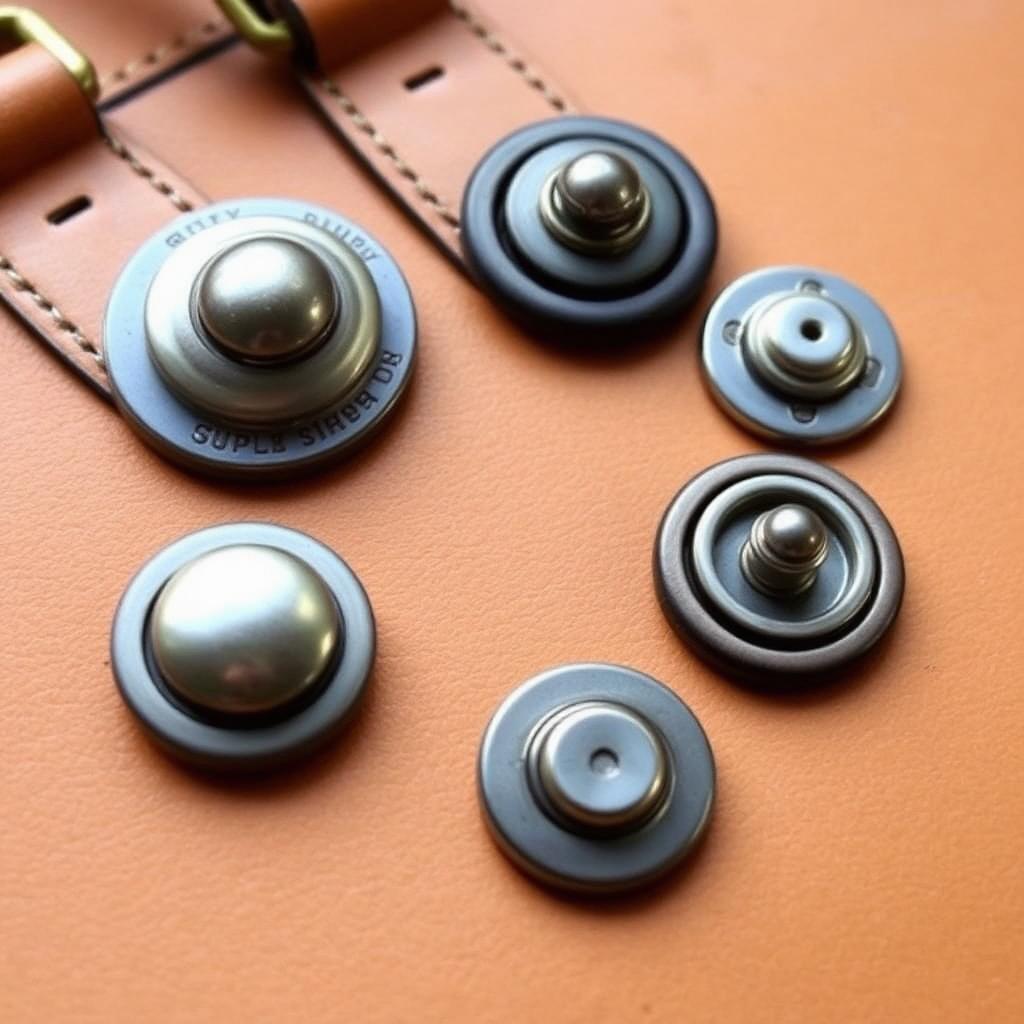
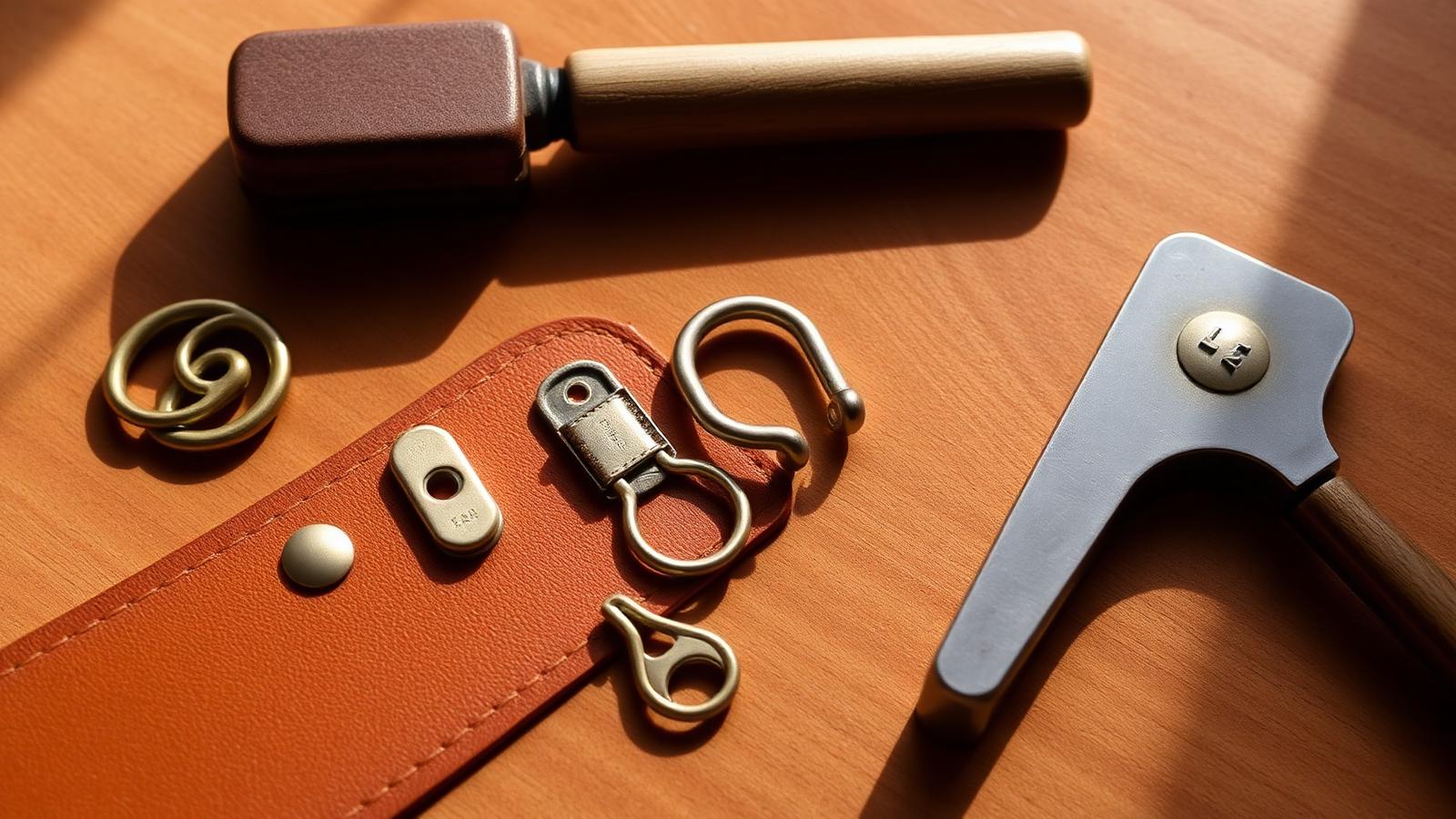
Chicago Screws vs Rivets for Leather Belts: Which Fastener Should You Use?
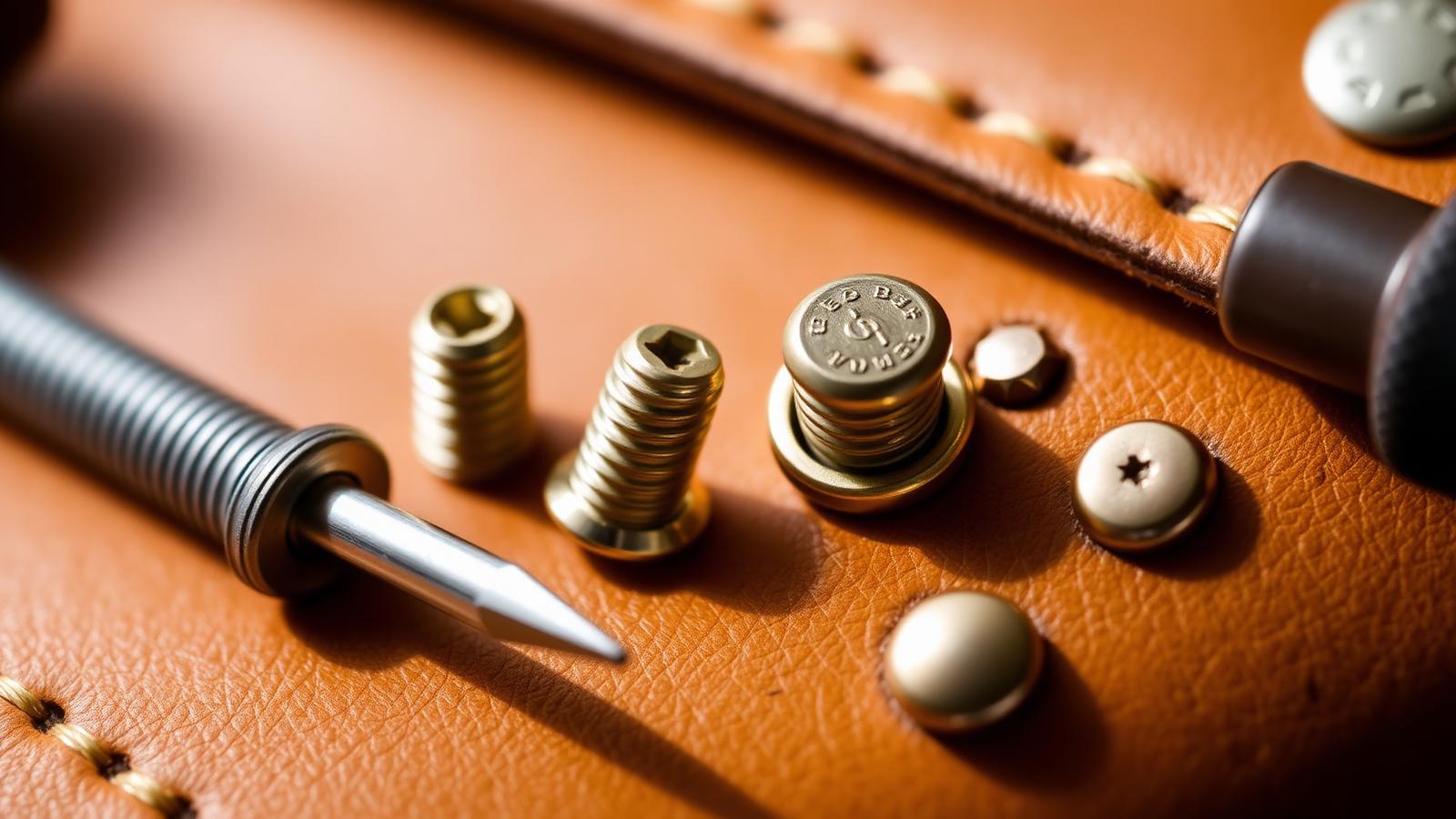
Chicago screws (also called sex bolts, book screws, or post-and-screw fasteners) and rivets do the same job — hold two layers of leather together — but they fail in opposite ways and excel at opposite use cases. This guide settles the trade-off for belts, holsters, collars, and wallets.
What each one actually is
Chicago screw
A two-piece threaded fastener: a hollow post on one side, a screw cap on the other. Pass the post through both layers, thread the cap from the back, tighten with a flathead screwdriver. Removable any time. Sold in solid brass, stainless steel, nickel-plated, and antique finishes.
Rivets
Permanent mechanical fasteners. Double cap rivets snap together with a hand setter. Solid copper rivets use a burr and are peened with a ball-peen hammer (we cover the full process in our copper rivet tutorial). Once set, both require destruction to remove.
Strength comparison
| Fastener | Shear strength | Pull-through resistance |
|---|---|---|
| Solid copper rivet (#12) | Excellent | Excellent (burr distributes load) |
| Double cap rivet | Good | Moderate (caps can pop under shear) |
| Chicago screw (solid brass) | Good | Good (large head and post flange) |
| Chicago screw (plated zinc) | Poor | Poor (thread strip risk) |
For load-bearing builds — gun belts, holsters, dog collars on large breeds — solid copper rivets win on raw strength. Chicago screws in solid brass are close enough that the difference rarely matters in everyday use.
Repairability: the deciding factor
This is where chicago screws earn their place. A belt with a Chicago-screw billet can be:
- Buckle swapped without cutting stitching.
- Re-sized at the billet by re-punching a new screw hole.
- Disassembled for conditioning the strap interior.
A riveted billet can do none of the above. To swap the buckle you grind off the rivet head, drill out the shaft, and re-punch — a 15-minute repair on screws becomes a destructive process on rivets.
Failure modes
Chicago screws
The #1 failure: screws back out. Vibration and flexing slowly unthread the cap. Fix with a drop of Loctite Blue (242) on the threads — it locks the screw without bonding permanently. Reapply when you next disassemble.
Avoid: plated zinc chicago screws. The threads strip in 5–10 cycles. Solid brass or stainless only.
Rivets
Double cap rivets occasionally pop their cap if set on too-thin leather or with a worn setter. Solid copper rivets fail by shaft fatigue if undersized for the load. Both are far less likely to fail than a strap mounted with cheap chicago screws.
Looks and feel
Chicago screws give a clean, finished look on both sides — useful when both faces of the strap show (think reversible belts, watch straps, dog collars).
Double cap rivets give matched smooth caps on both faces but in a smaller, more decorative footprint.
Solid copper rivets show a hand-peened head on one side and a polished burr on the other — the traditional saddler aesthetic. Loved by heritage and Western builds.
Use case recommendations
- Belt billets (buckle attachment): Chicago screws. The buckle will outlast 2–3 straps; let it be swappable.
- Holsters and sheaths: Solid copper rivets. Permanent load, no reason to disassemble.
- Dog collars: Chicago screws on the buckle billet, rivets at hardware attachment points.
- Wallets and small goods: Double cap rivets — clean and decorative.
- Watch straps: Chicago screws (lets the wearer change spring bars or sizing).
- Heavy work belts and gun belts: Solid copper rivets at billet, optional Chicago screw if the customer wants buckle swapping.
Hardware sourcing
For solid brass chicago screws and rivets, the same suppliers cover both — Buckleguy, Weaver, and Rocky Mountain Leather. Stick to solid brass or stainless; see our brass vs plated breakdown for finish details.
Key takeaways
- Rivets are permanent and slightly stronger; chicago screws are removable.
- Use chicago screws anywhere the customer might want to disassemble (belts, collars, watch straps).
- Use rivets for one-and-done permanent builds (holsters, wallets, sheaths).
- Solid brass or stainless only — avoid plated zinc in both fastener types.
- Loctite Blue (242) prevents chicago screw back-out.
FAQ
Are chicago screws strong enough for a gun belt?
Solid brass chicago screws (#10 or larger post) handle gun belt loads, but most professional holster makers still prefer copper rivets for the permanence and the no-back-out guarantee.
Can I mix chicago screws and rivets on one piece?
Yes — common practice on premium belts. Rivets where strength matters, chicago screws where adjustability matters.
What size chicago screw for a belt billet?
Most belts use #8 (5 mm post diameter) for normal weight, #10 (6 mm) for heavy belts. Match post length to total leather thickness — the screw should bottom out without protruding.
Conclusion
Pick your fastener based on what the customer will need ten years from now: rivets if it should never come apart, chicago screws if it should come apart cleanly. For deeper dives on rivet types and installation, browse the full rivets, snaps & fasteners category.
Enjoyed this guide?
Browse more in Rivets, Snaps & Fasteners or share this article with another leather maker who'd find it useful.