Spring Snaps vs Line Snaps: Which Closure Should You Use on Leather?
Snap fasteners come in two mechanical families: spring snaps (Pull-the-Dot, S-spring, Durable Dot) and line snaps (Line 20 and Line 24 cap snaps). They look similar in a catalog and act very differently in the hand. This guide breaks down how each one closes, where each one belongs, and how to install both cleanly.
How they work mechanically
Line snaps (cap snaps)
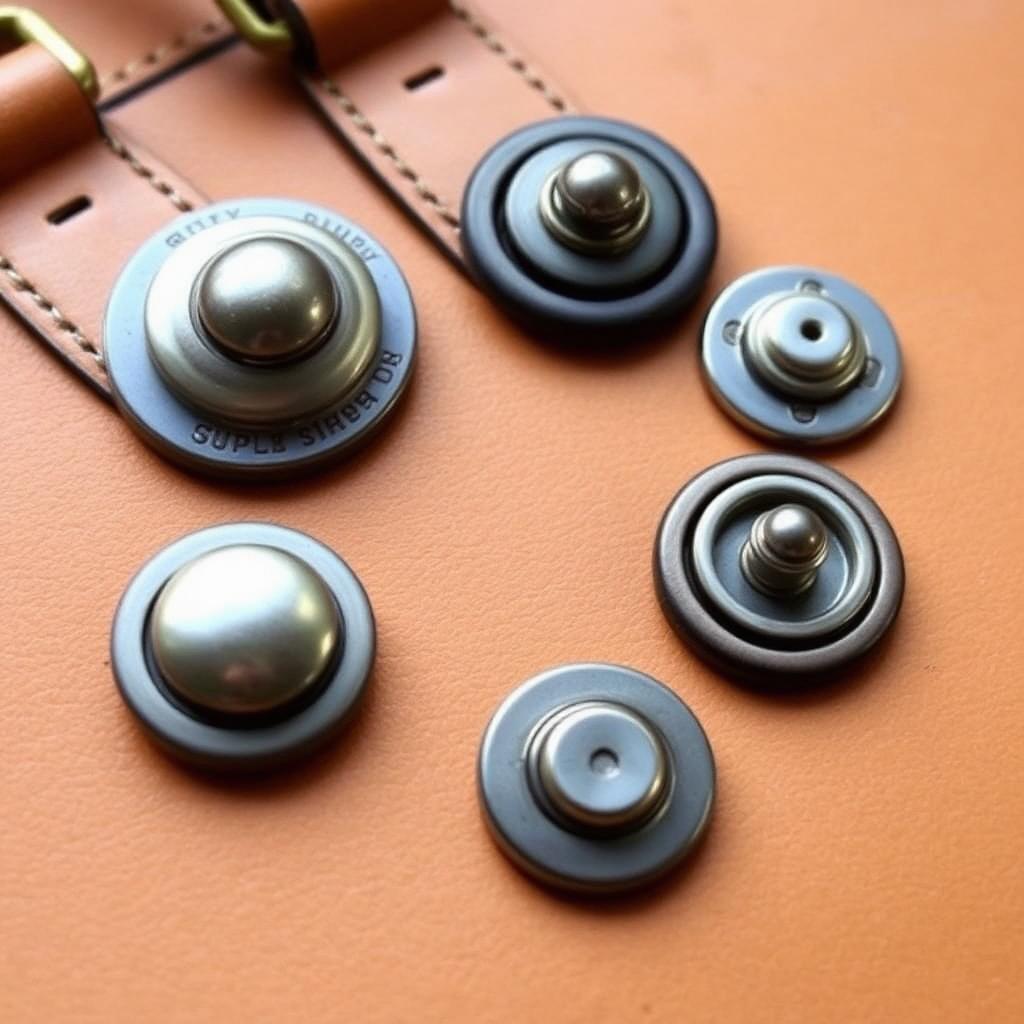
A round socket grips a stud via a continuous rolled ring of metal. Pull straight up or pull at an angle — the resistance is the same in every direction. Found on wallets, key fobs, watch straps, light bag flaps.
Spring snaps
Two opposing leaf springs grip the stud. S-spring snaps hold equally in all directions but with more force than line snaps. Pull-the-Dot snaps hold rock-solid against straight-pull and release easily when pulled at a specific angle — the directional closure used on military gear, holsters, and motorcycle jackets.
Holding strength compared
| Snap type | Holding force | Release behavior |
|---|---|---|
| Line 20 | Light | Pops open from any angle |
| Line 24 | Medium | Pops open from any angle |
| S-spring | Strong | Pops open from any angle |
| Pull-the-Dot | Very strong | Locks under straight pull; releases at a defined angle |
| Durable Dot | Very strong | Equal in all directions; designed for marine use |
Sizing reference
- Line 20 — 12.5 mm cap. Wallets, watch straps, key fobs. See our Line 20 installation tutorial.
- Line 24 — 15 mm cap. Bag flaps, larger straps, light closures.
- S-spring (15 mm) — Same footprint as Line 24, stronger hold. Common on premium leather bags.
- Pull-the-Dot (15 mm) — Same footprint, directional release. Holsters, jackets, military.
- Durable Dot (15 mm) — Marine canvas standard; also used on heavy leather bag flaps.
Installation differences
Line snaps
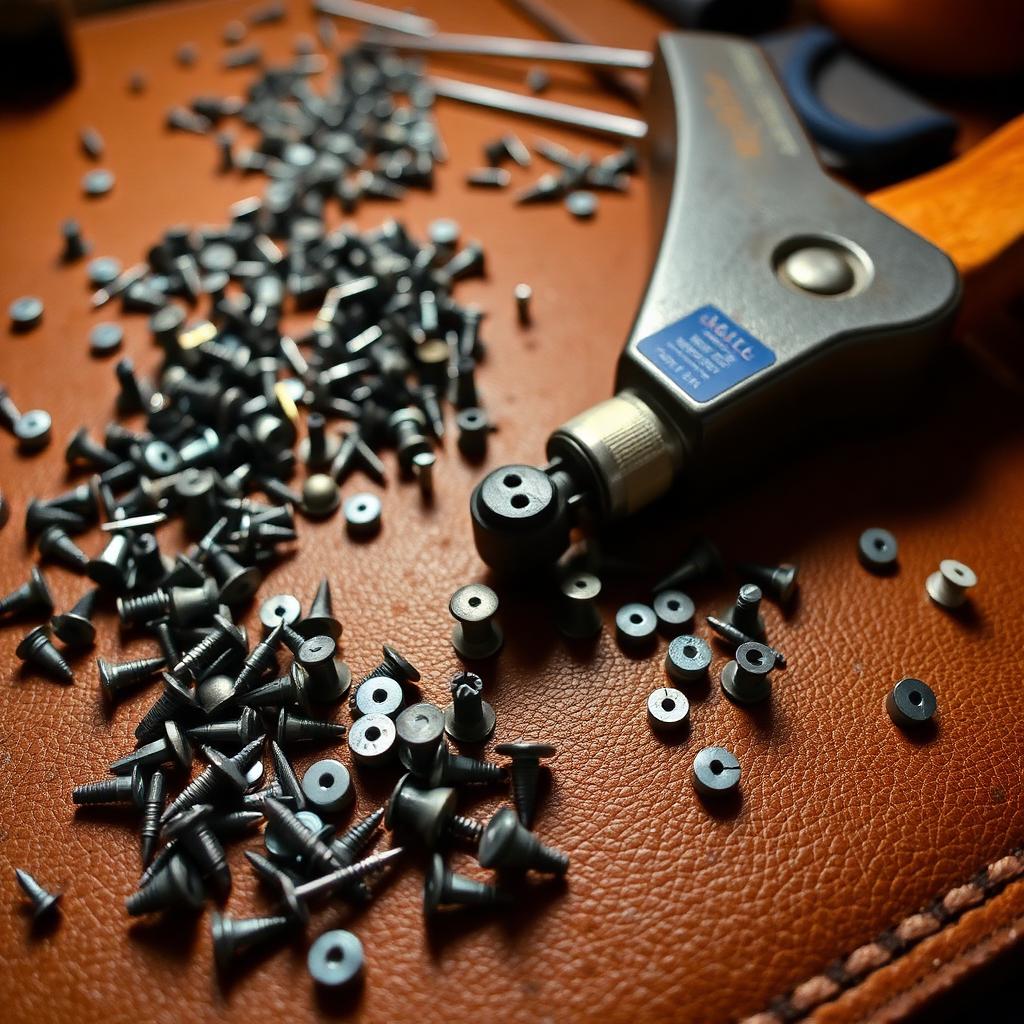
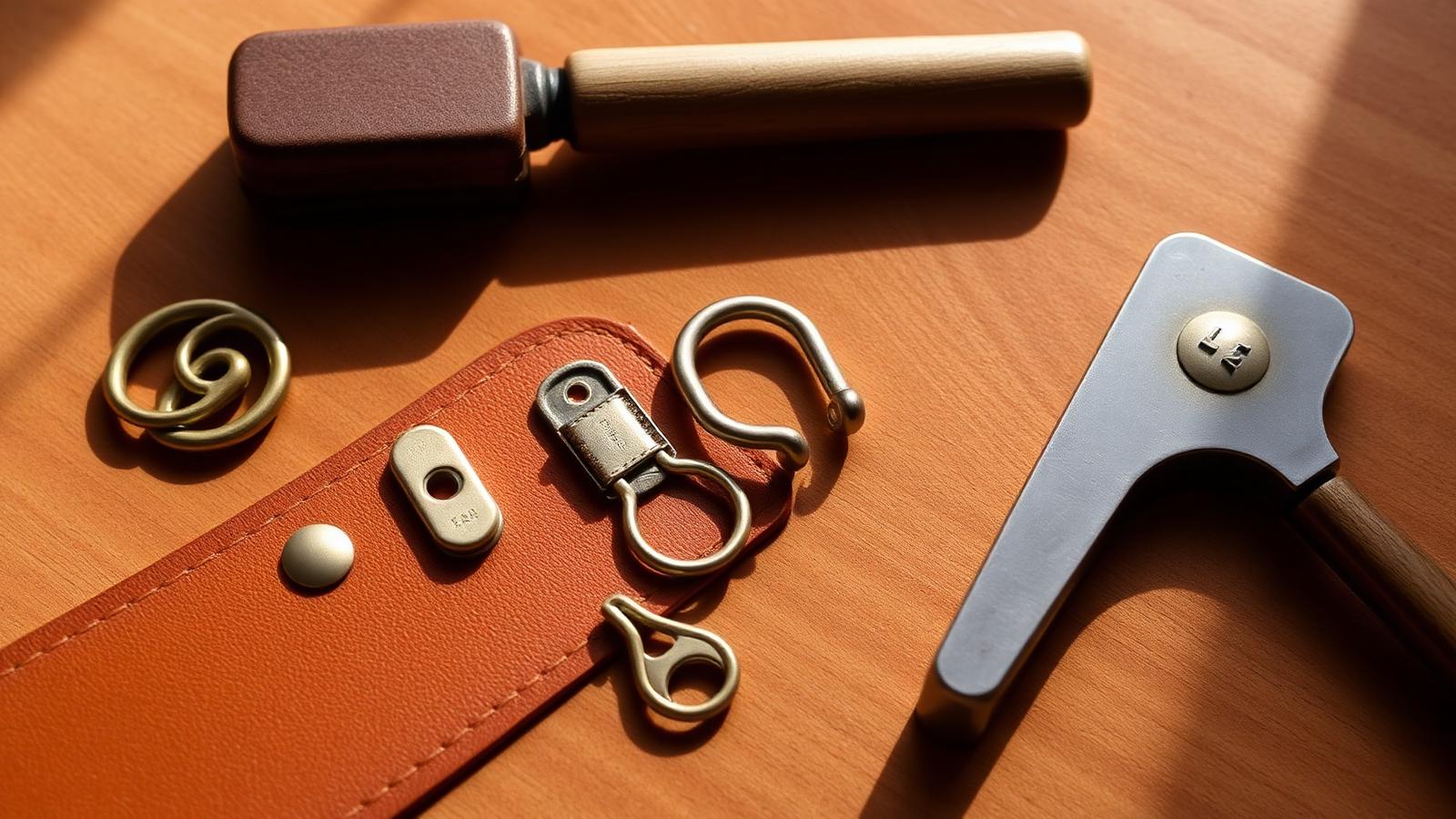
Install with a hand setter and mallet — no press needed. The cap nests in an anvil cup, post pokes through the leather, socket drops over the post, setter compresses everything. Fast, clean, beginner-friendly. Full walkthrough in our Line 20 by hand guide.
Spring snaps
Installation is similar but the dies are different per snap type. A Line 24 setter will not set a Durable Dot — the post profile and socket geometry don't match. Buy a die kit that matches your snap family (Tandy, Goldstar Tool, and CS Osborne all sell complete kits).
Pull-the-Dot snaps also have a directional orientation — there's a "lift this side" notch on the socket. Mark your release direction before setting; the snap can't be rotated after installation.
When to use which
- Wallets and small goods: Line 20 — light, clean, low profile.
- Watch straps and bracelets: Line 20 — minimal show side.
- Key fobs and lanyards: Line 20 or Line 24 — easy one-hand release.
- Bag flaps (light): Line 24 — visible-but-discreet.
- Bag flaps (heavy, important contents): S-spring — won't accidentally pop in a backpack.
- Holsters: Pull-the-Dot — opens fast in one direction, can't be pulled open from the wrong angle.
- Motorcycle jackets, military gear: Pull-the-Dot — defined release prevents wind/gear snags from opening it.
- Marine and outdoor: Durable Dot in stainless or solid brass — corrosion-resistant under salt exposure.
Finish and metal
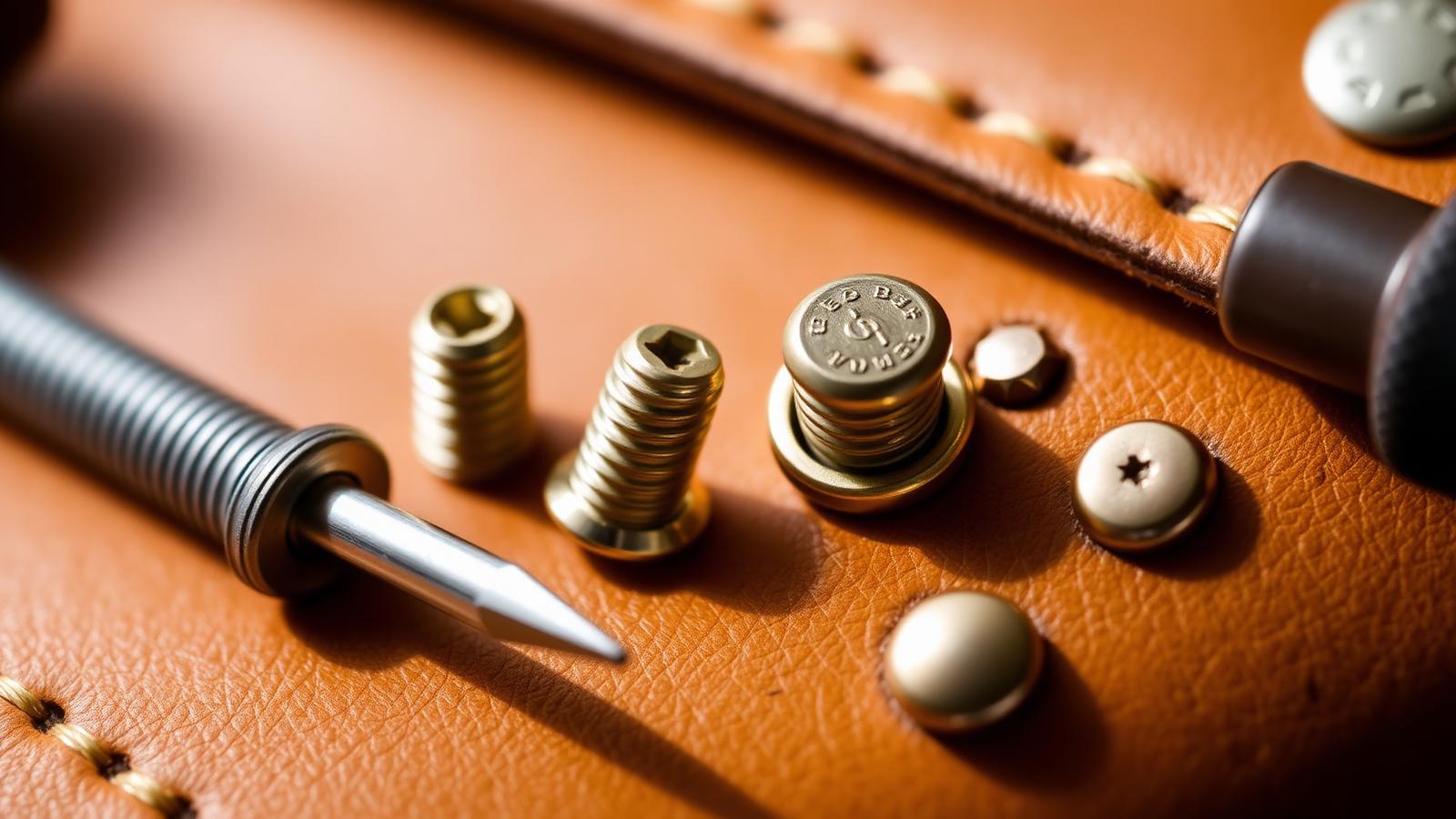
Snaps come in solid brass, nickel-plated brass, stainless steel, and antique brass. For long-term wear and corrosion resistance, stick to solid brass or stainless. Plated finishes flake at the cap edge after 2–3 years of glove or pocket contact. See our solid brass vs plated guide for finish durability tests.
Common installation problems
- Snap won't close. Hole was too far from the mating snap; remeasure the layout, not the snap.
- Cap deformed. Used a steel hammer instead of a rawhide or poly mallet. Always use a soft-face mallet on snap caps.
- Snap spins after setting. Hole was oversized — punch should match post diameter (3 mm for Line 20, 3.5 mm for Line 24 and most spring snaps).
- Pull-the-Dot won't release in the right direction. Socket was installed rotated 90° or 180°. Orient before setting.
Key takeaways
- Line snaps for everyday closures; spring snaps for security-critical or directional needs.
- Pull-the-Dot is the only snap with intentional directional release.
- Use a soft-face mallet — never steel — on snap caps.
- Solid brass or stainless for any snap meant to last beyond 3 years.
FAQ
Are Pull-the-Dot and Durable Dot interchangeable?
No. Same cap size (15 mm) but different socket mechanics and different setters. Pick one and stick to it within a single product line.
Can I install spring snaps with a press?
Yes — most benchtop presses (Pres-N-Snap, Klipa) handle all the common snap families with the right dies. For low volume, hand setters work just as well.
What's the strongest snap for leather?
Durable Dot in solid brass, marine-rated. Originally designed to hold boat covers against wind load — overkill for most leather, but unbeatable holding strength.
Conclusion
Match the snap to the job: Line for light and clean, spring for strong, Pull-the-Dot for directional. Once you know the mechanical family, picking sizes and finishes is straightforward. Browse the full rivets, snaps & fasteners category for more closure deep-dives.
Enjoyed this guide?
Browse more in Rivets, Snaps & Fasteners or share this article with another leather maker who'd find it useful.