Rapid Rivets vs Double Cap Rivets: Which Leather Rivet Should You Use?
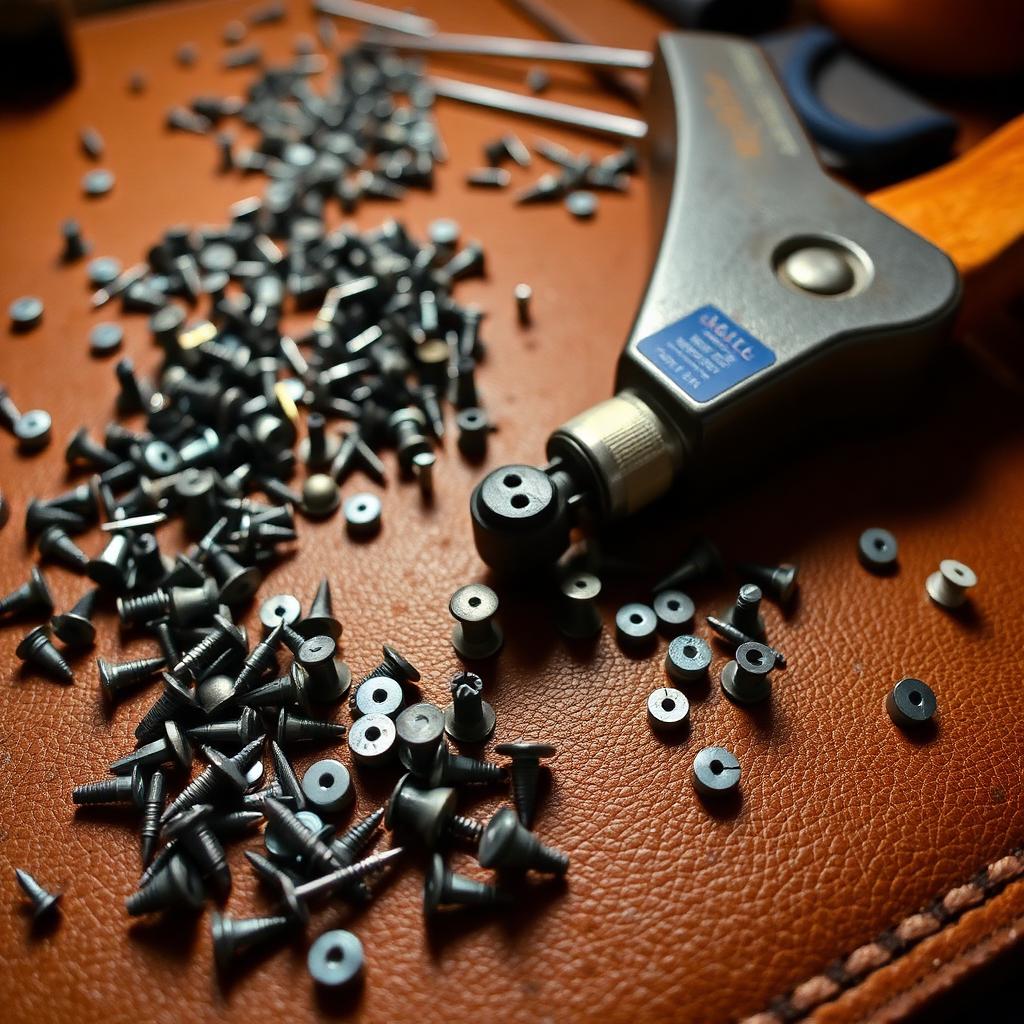
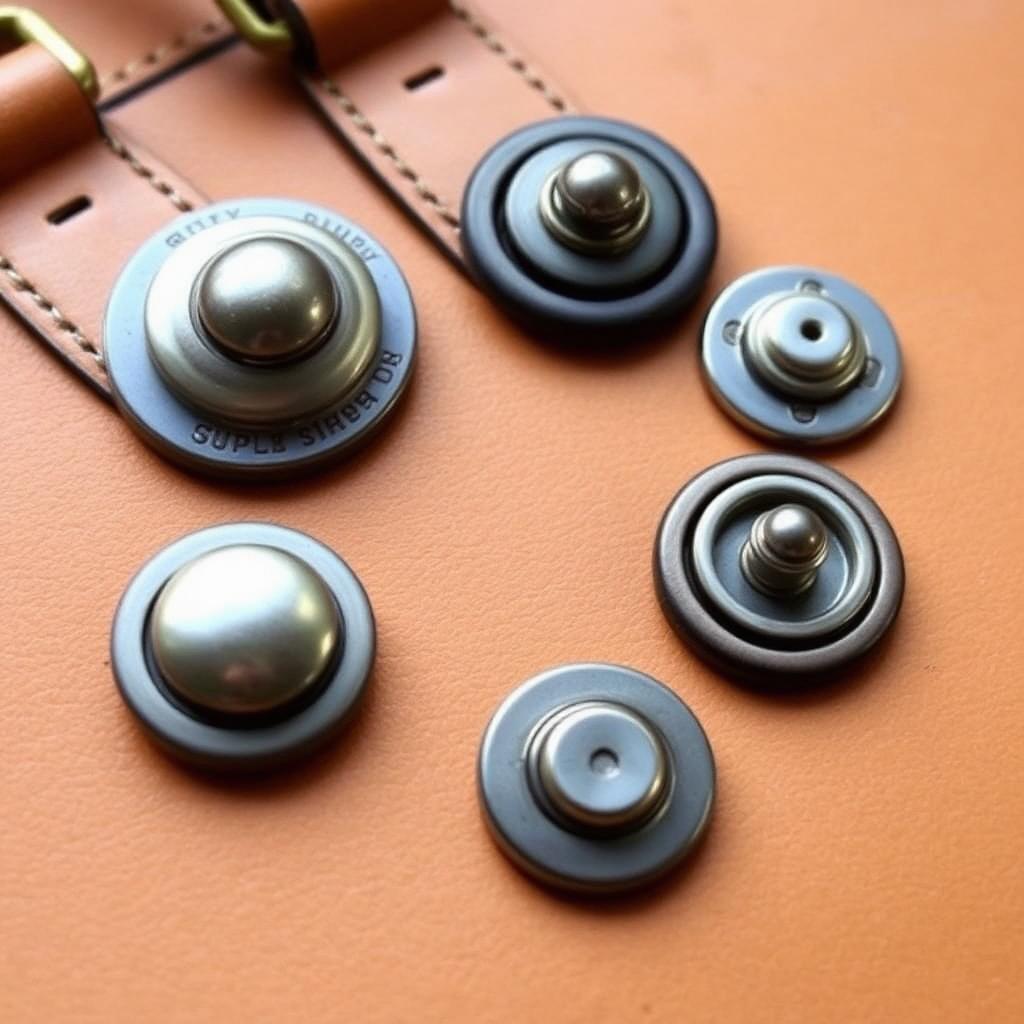
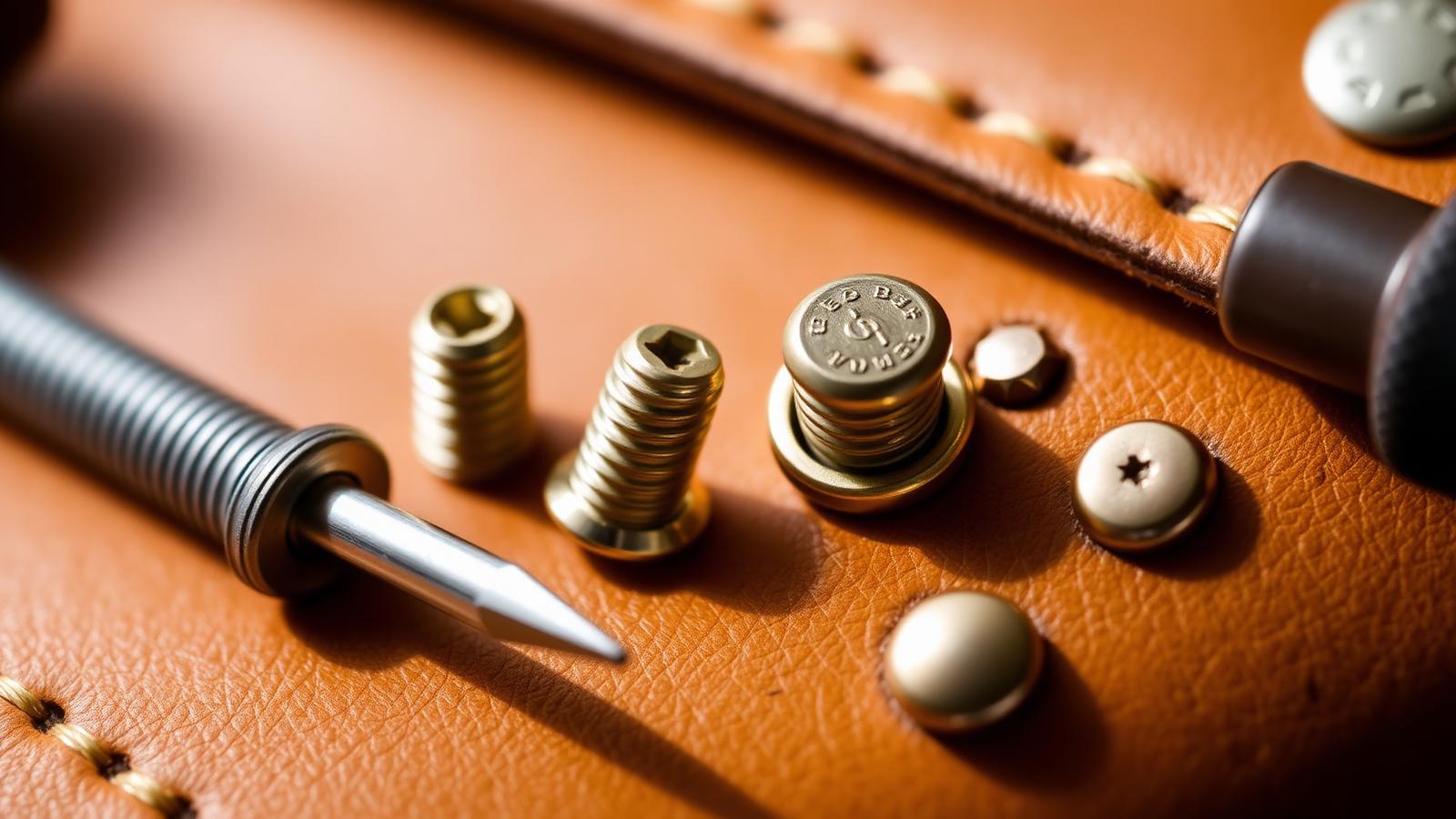
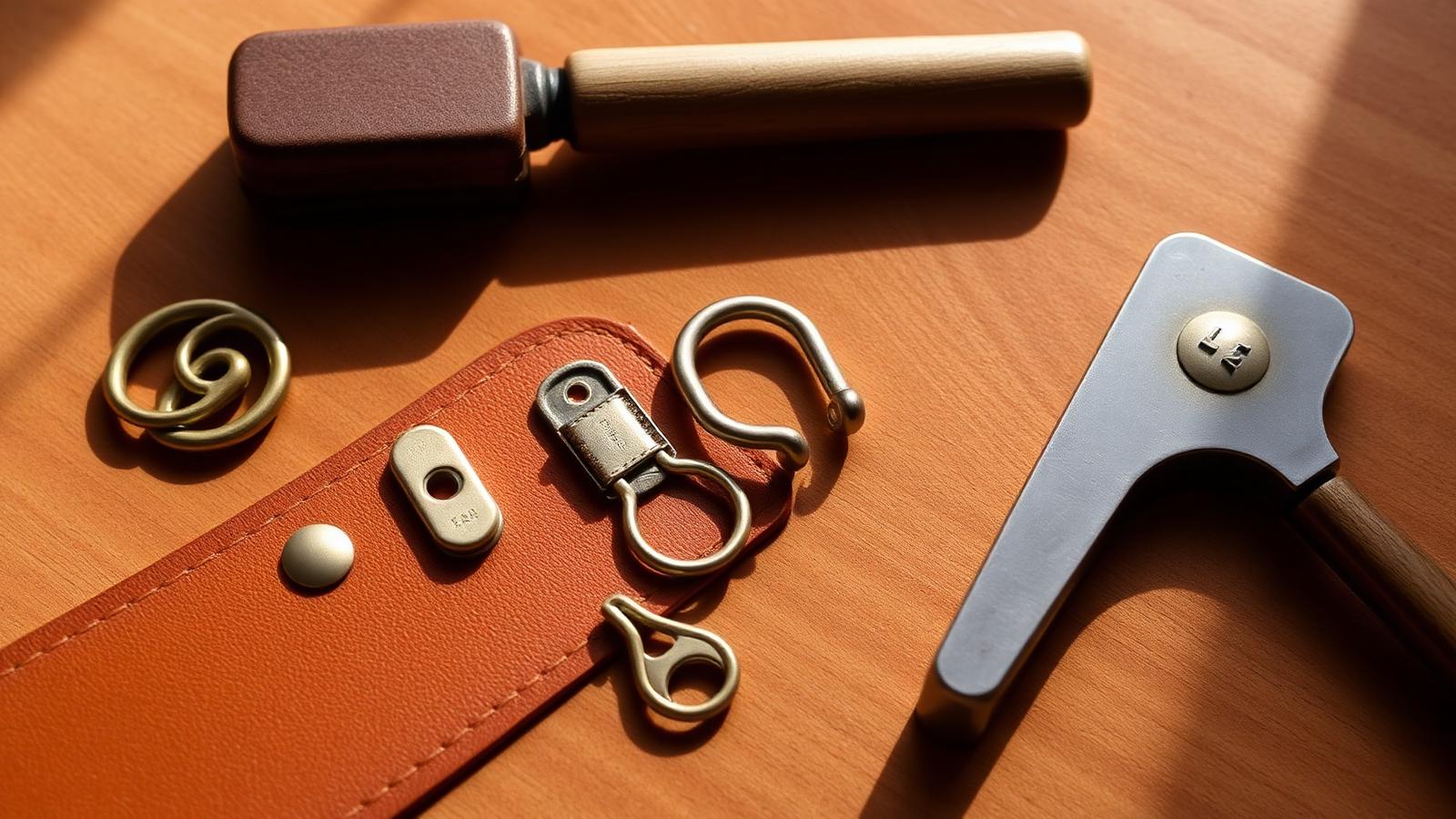
The rivet section at every leather supplier lists at least two dominant fastener families: rapid rivets (also sold as "eyelet rivets" or "single cap rivets") and double cap rivets. Both are two-piece fasteners set with a hand setter — but they solve different jobs. Getting the choice right avoids strap failure, cap pop-off, and unnecessary rework.
What each rivet is
Rapid rivet
Two parts: a decorative cap and a hollow tubular post. The post pushes through the leather from the back; the cap snaps down over the post from the front. The post has a small flange that acts as the "back" — visible from the reverse side of the leather.
Effectively a one-sided rivet: pretty on the front, functional (but flat) on the back.
Double cap rivet
Two parts: two matched caps and a shared post that joins them. Both caps are decorative and identical. Set from both sides, so both faces of the leather show the same finished cap.
Head-to-head comparison
| Attribute | Rapid rivet | Double cap rivet |
|---|---|---|
| Appearance (front) | Decorative cap | Decorative cap |
| Appearance (back) | Flat flange (utilitarian) | Decorative cap (identical to front) |
| Strength | Moderate | Good |
| Cap pop-off risk | Moderate (front cap only clinches on the post rim) | Low (caps mechanically joined by post) |
| Leather thickness range | Narrow — post length is fixed | Wider — sold in multiple post lengths |
| Best use | Where back is hidden | Where both sides show |
| Cost | Slightly cheaper | Slightly more expensive |
Strength: the mechanical detail
Both rivets fail in the same way: the cap pops off the post under a sharp shear or pull load. Rapid rivets fail more often because the front cap clinches only around the post's rolled rim — a relatively small mechanical engagement. Double cap rivets have caps on both ends that share load, so the failure force is meaningfully higher.
For a rough industry rule: on 2mm veg-tan, a #7 rapid rivet holds ~15–20 kg of pull; a same-size double cap rivet holds ~25–35 kg. Neither compares to a solid copper rivet (see our copper rivet tutorial).
The thickness problem
This is the most common installation mistake. Every rivet post has a fixed length. If the leather stack is:
- Too thin: The post has excess length. The cap crushes the post into a mushroom on the wrong side of the leather, or the whole assembly compresses the leather permanently.
- Too thick: The post is too short to reach the cap. The rivet sets loose and pops within days.
Rapid rivets are usually sold in one or two post lengths. Double cap rivets are sold in 4mm, 5mm, 6mm, 8mm, 10mm, and 12mm posts — much better coverage for thick leather stacks like belt billets or holster edges.
Rule of thumb: post length = leather thickness + 1.5mm to 2mm. Anything outside that window will fail.
Installation
Both rivets install the same way:
- Punch a hole matching the post diameter (typically 3–4mm for common sizes).
- Push the post through from the back.
- Place the cap (or second cap for double cap) on the front.
- Set with a hand setter on an anvil — a firm strike with a 12–16oz mallet.
Rivet setters are specific to the cap size. A #7 setter will not properly set a #8 cap. Buy the setter kit matched to the rivet family you use most.
Aesthetic scenarios
Rapid rivets belong when:
- The back of the leather is glued down to a lining (bags, wallets, phone cases).
- The back sits against the wearer's body (belt back, watch strap underside).
- The build is decorative and structural stress is low.
Double cap rivets belong when:
- Both faces of the leather show — dog collars, reversible belts, exposed strap connections.
- The strap will flex repeatedly and needs the stronger clinch.
- You need multiple post lengths for a thick stack.
Use case matrix
| Project | Best rivet | Notes |
|---|---|---|
| Wallet edges | Rapid rivet | Back is lined, decorative front only |
| Bag handle attachment | Double cap | High stress, both sides show |
| Belt keeper loop | Double cap | Both sides visible when wearing |
| Dog collar hardware | Double cap (or copper) | High stress, both sides show |
| Watch strap | Rapid rivet | Back sits on wrist, hidden |
| Camera strap ends | Double cap | Both sides visible, medium stress |
| Card holder trim | Rapid rivet | Decorative only, low stress |
| Holster stitching backup | Copper (see tutorial) | Critical strength, permanent |
Common failures
Rapid rivet cap pops off
Almost always caused by wrong post length or under-set (weak hammer strike). Re-check the leather thickness spec.
Double cap rivet spins
Hole was over-punched. The post has no wall to grip. Downsize the hole punch by 0.5mm.
Cap dented or crooked
Wrong setter for the cap size, or setter not held perpendicular during the strike. Use the matched setter and keep it vertical.
Material and finish
Both rivet families come in:
- Solid brass — best for premium builds, patinas naturally.
- Nickel-plated brass — bright silver, most common.
- Antique brass finish — matches heritage aesthetics (see our antique brass guide).
- Black oxide / matte black — trending for 2026 (see matte black finish guide).
- Solid copper — heritage warmth, moderate cost.
Avoid painted zinc rivets. The paint chips at the cap edge on the first strike.
Sourcing
Buckleguy stocks solid brass rapid and double cap rivets in the widest US finish range. Tandy Leather stocks affordable plated variants for classroom and hobby use. Weaver Leather Supply carries commercial quantities and matched setter kits.
Key takeaways
- Rapid rivet: one decorative face, hidden back — belts, wallets, watch straps.
- Double cap rivet: two decorative faces, better strength — bags, collars, exposed straps.
- Post length must match leather thickness + 1.5–2mm. Get this wrong and the rivet fails.
- Both are consumer-grade; use solid copper rivets for high-stress load-bearing joins.
- Solid brass, copper, or plated brass — never painted zinc.
FAQ
Can I set rivets without an anvil?
Not properly. The anvil absorbs the strike energy and shapes the cap. A cutting board or concrete floor will dent, deform the cap, or bounce back and leave a loose rivet.
Are rapid rivets ever strong enough for belts?
For decorative belt keepers, yes. For structural joins (buckle billet attachment), no — use double cap rivets or Chicago screws. See our chicago screws vs rivets comparison.
Can I mix rivet types on one build?
Yes — common practice. Double cap for load-bearing points, rapid for decorative trim.
Conclusion
Pick rapid rivets when only the front face matters and stress is low; pick double cap rivets when both sides show or when the joint needs to hold under real load. For a full rivet family overview and installation tutorials, browse the rivets, snaps & fasteners category.
Enjoyed this guide?
Browse more in Rivets, Snaps & Fasteners or share this article with another leather maker who'd find it useful.