Carabiner Hooks vs Snap Hooks for Leather Key Fobs & EDC
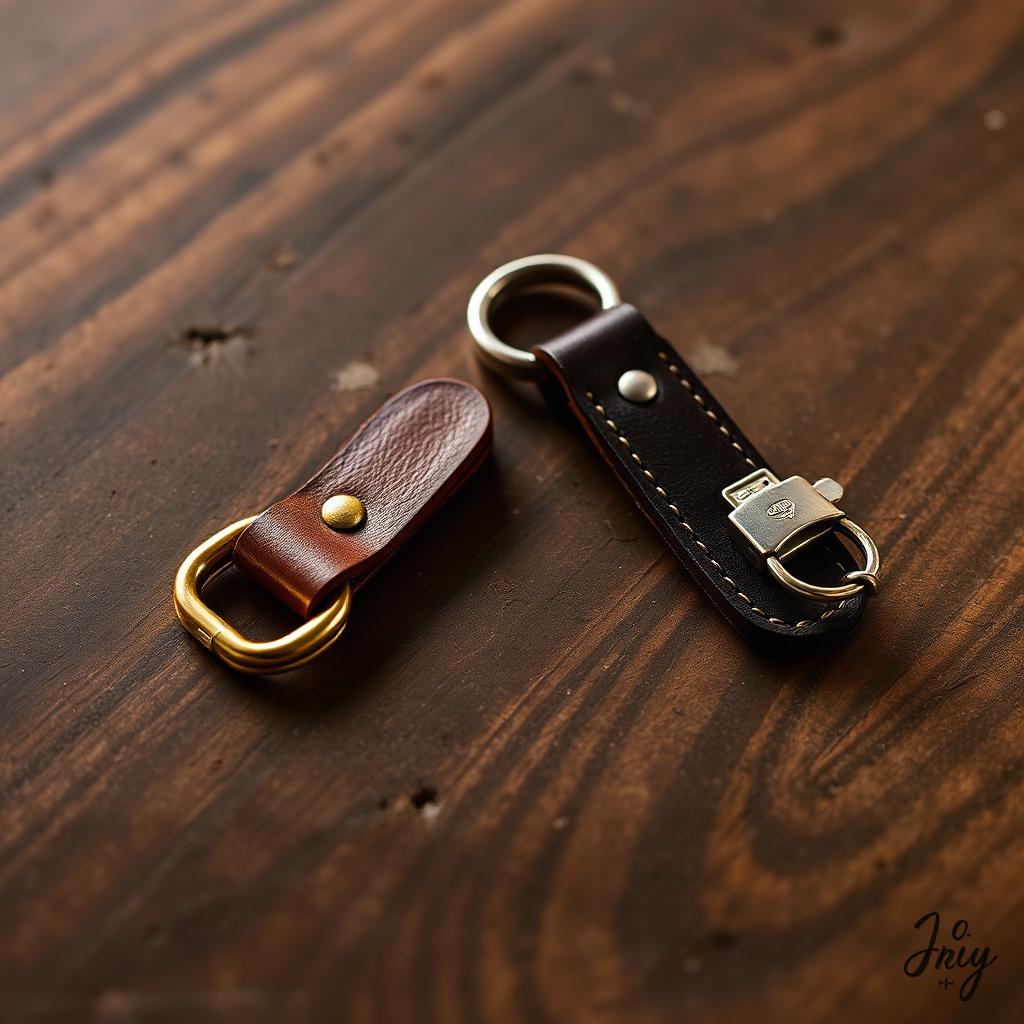
A leather key fob is one of the smallest things you can make — and one of the most-touched objects a person owns. The hardware choice defines it. Carabiner or snap hook is not a style question; it is a use-case question with a right answer for each scenario.
The mechanical difference
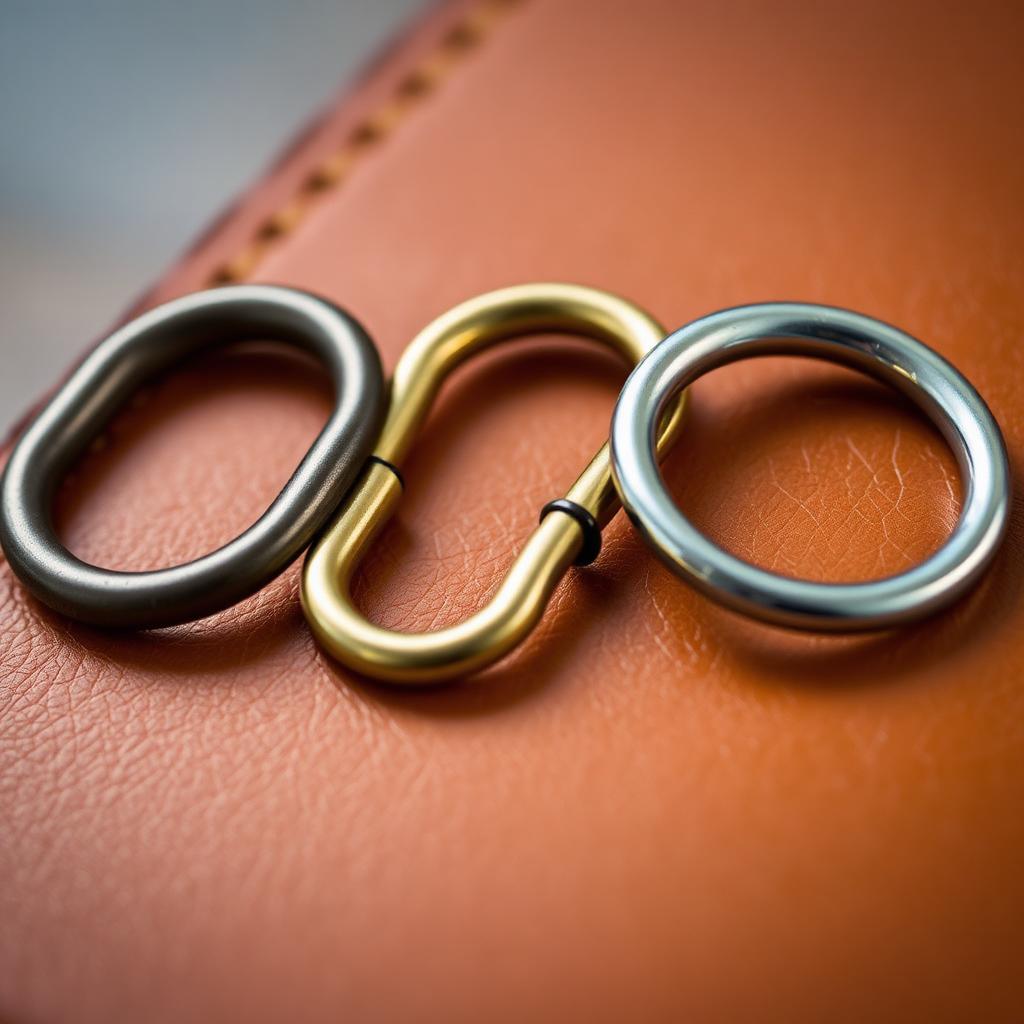
A carabiner has a spring-loaded gate on the long side of an oblong loop. Push the gate inward with a thumb to open. Designed for climbing, adapted for EDC.
A snap hook (swivel, trigger, or bolt) has a spring-loaded latch at the narrow end of a J-shape. Pull a small lever or trigger to open. Designed for equestrian and marine rigging, ubiquitous on handbags and dog leads.
Head-to-head
| Property | Carabiner | Snap hook |
|---|---|---|
| One-handed clip / unclip | Yes — thumb operation | Two hands typically needed |
| Clip to a belt loop | Yes | No — hook throat is closed |
| Accidental opening risk | Higher — gate can catch on fabric | Very low |
| Look on leather | Rugged, utilitarian, EDC | Refined, jewelry-like |
| Load rating | High (climbing carabiners are 20kN+, but decorative brass carabiners are much lower — check the spec) | Moderate — 5–15kg for typical brass |
| Cost (solid brass, 40mm) | $4–7 | $3–5 |
Note: decorative "brass carabiners" sold for keychains are not rated for climbing loads regardless of appearance. Real climbing carabiners are stamped with a kN rating and CE/UIAA certification. For lifesaving loads use certified gear — see the UIAA safety standards.
Choosing by use case
Choose a carabiner when…
- The user clips the fob to a belt loop or bag strap frequently.
- The design brief is EDC, outdoor, or workwear.
- The user wants to hand off keys to another person one-handed.
- Loads are meaningful — a full ring of 15+ keys.
Choose a snap hook when…
- The fob lives in a pocket or handbag and clips onto an interior D-ring.
- The design is minimal, dressy, or handbag-adjacent.
- Silence matters — snap hooks are quieter than carabiners against keys.
- The user has had a carabiner accidentally open on them before.
Matching hardware to leather weight
The mistake most makers make is over-sizing hardware. On a 3oz (1.2mm) veg-tan fob, a 60mm carabiner looks like a boat anchor. Rules of thumb:
- Thin dress leather (2–3oz): 30–40mm hardware.
- Standard EDC leather (4–5oz): 40–50mm hardware.
- Heavy tooled or work leather (6–8oz): 50–60mm hardware.
Material notes
- Solid brass patinas warmly and matches natural veg-tan beautifully. First choice for handmade fobs.
- Stainless steel stays bright forever. Best for black or oiled dark leather.
- Plated zinc — avoid. The plating wears at the gate/trigger in weeks and the base zinc turns grey.
For snap hook subtypes on fobs, see our swivel vs trigger snap hooks guide and the bolt vs trigger comparison.
Key takeaways
- Carabiner: one-handed, clips to belt loops, EDC aesthetic — best for daily-carry key fobs.
- Snap hook: cleaner look, quieter, safer against accidental opening — best for handbag-oriented fobs.
- Solid brass or stainless steel only. Plated zinc always fails at the moving part first.
- Match hardware size to leather weight — over-sized hardware ruins small fobs.
Explore more strap hardware strategy in the full D-rings, hooks and connectors category.
Enjoyed this guide?
Browse more in D-Rings, Hooks & Connectors or share this article with another leather maker who'd find it useful.