Cast vs Forged vs Stamped D-Rings: Which Is Actually Stronger?
Ask ten leather suppliers for a "solid brass D-ring" and you will get three completely different products. One will be cast, one forged, one stamped from sheet. All three are legally "solid brass." Only one of them belongs on a bag you plan to sell.
The three processes
Cast D-rings
Molten metal poured into a mold, cooled, cleaned up, plated or polished. Fast and cheap. Grain structure is disorganized — small internal voids from air bubbles are common.
Forged D-rings
A billet of metal is heated and hammered (either by hand or by drop-forge press) into shape. The grain structure aligns with the ring's contour, dramatically increasing strength. This is how horse tack and marine rigging hardware is made.
Stamped D-rings
Cut from flat sheet stock and bent into shape, then usually welded at the joint. The metal keeps its rolled grain structure — strong in one axis, weaker perpendicular to the sheet direction.
Real-world comparison
| Property | Cast | Forged | Stamped |
|---|---|---|---|
| Relative strength (25mm brass) | 1.0× | 3.5–4.0× | 1.8–2.2× |
| Cost per unit | Lowest | 3–5× cast | 1.5× cast |
| Surface finish | Slightly grainy; needs polishing | Smooth, dense | Flat cross-section (obvious tell) |
| Failure mode | Snaps suddenly at void | Deforms first, then fails | Weld joint opens |
| Best for | Decorative, low load | Straps, heavy bags, tack | Wallets, light accessories |
How to tell them apart in hand
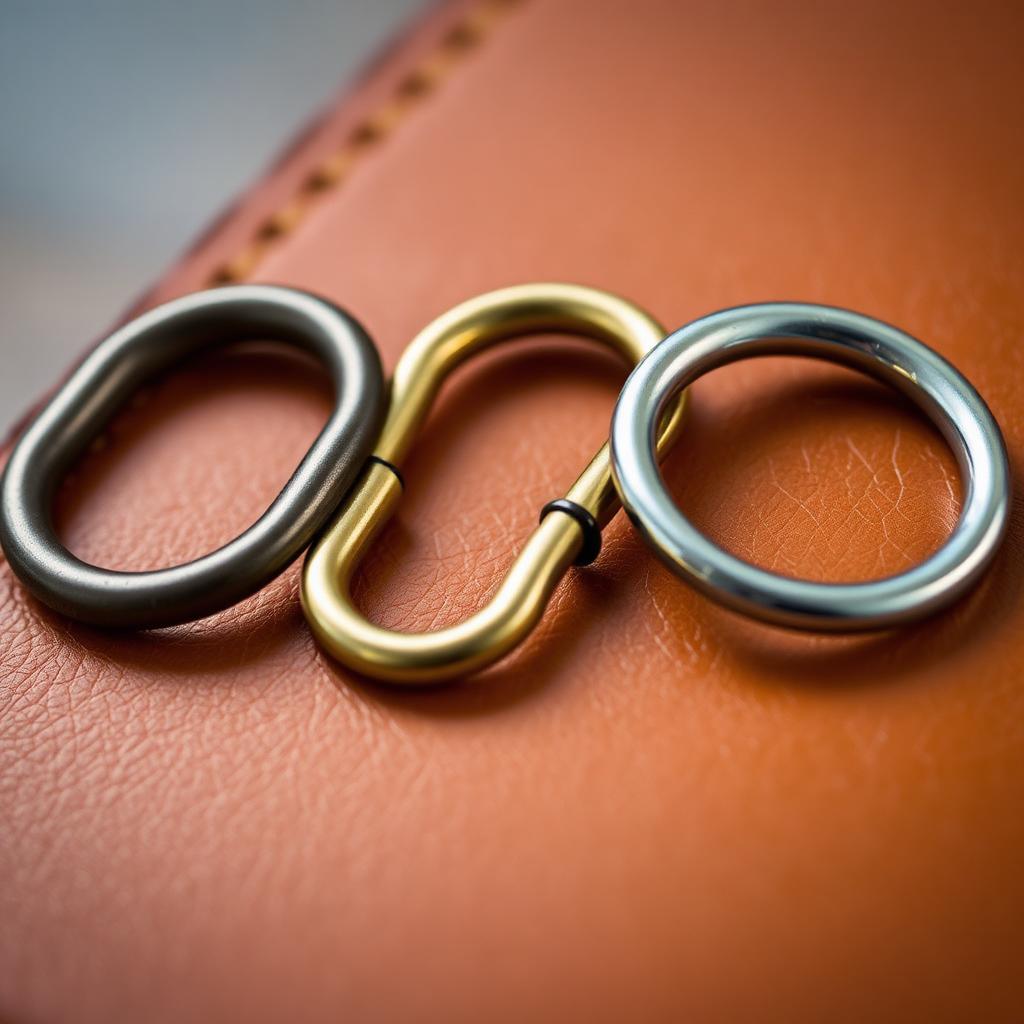
- Cross-section shape: forged and cast rings have a round or oval cross-section. Stamped rings have a rectangular cross-section (flat top and bottom) — the giveaway.
- Joint visibility: stamped rings almost always have a visible weld seam. Forged rings are seamless (or forge-welded so cleanly you cannot see it). Cast rings have a very faint parting line from the mold.
- Weight: forged rings feel denser than cast rings of the same visible size because there are no internal voids.
- Sound: tap two rings together. Forged brass rings ring like a bell; cast rings thud.
The metallurgy behind why forging beats casting is well documented — see the Forging Industry Association's overview.
Choosing by use case
- Heirloom leather bags, tote straps, dog leashes: forged solid brass or forged stainless. Period.
- Wallets, keychains, small accessories under 500g load: stamped is fine; cost matters and load is trivial.
- Decorative concho-style rings, upholstery accents: cast is acceptable — load is zero.
- Anything advertised as "for climbing" or "for pets over 20kg": forged only, and look for a stamped working load limit (WLL).
Sourcing forged brass rings
Reliable retail sources: Tandy Leather's "solid brass forged" line, Ohio Travel Bag, Buckle Guy, and Wuta Leather. Chinese wholesale marketplaces list "solid brass" rings that are almost universally cast — you can order forged from them but the SKU must explicitly say "forged" and price should be 3× cast pricing. If it is not, it is not.
Key takeaways
- Forged D-rings are 3–4× stronger than cast — same size, same metal.
- Stamped rings are cheap and adequate for light accessories only.
- Rectangular cross-section = stamped. Round cross-section + visible parting line = cast. Round cross-section + seamless = forged.
- For any strap that carries body-weight of anything, forged only.
Compare ring shapes in our D vs O vs rectangle ring guide, or size your bag strap hardware with choosing D-rings for bag straps.
Enjoyed this guide?
Browse more in D-Rings, Hooks & Connectors or share this article with another leather maker who'd find it useful.