Screw-Back Concho vs D-Ring Anchors on Western Leather
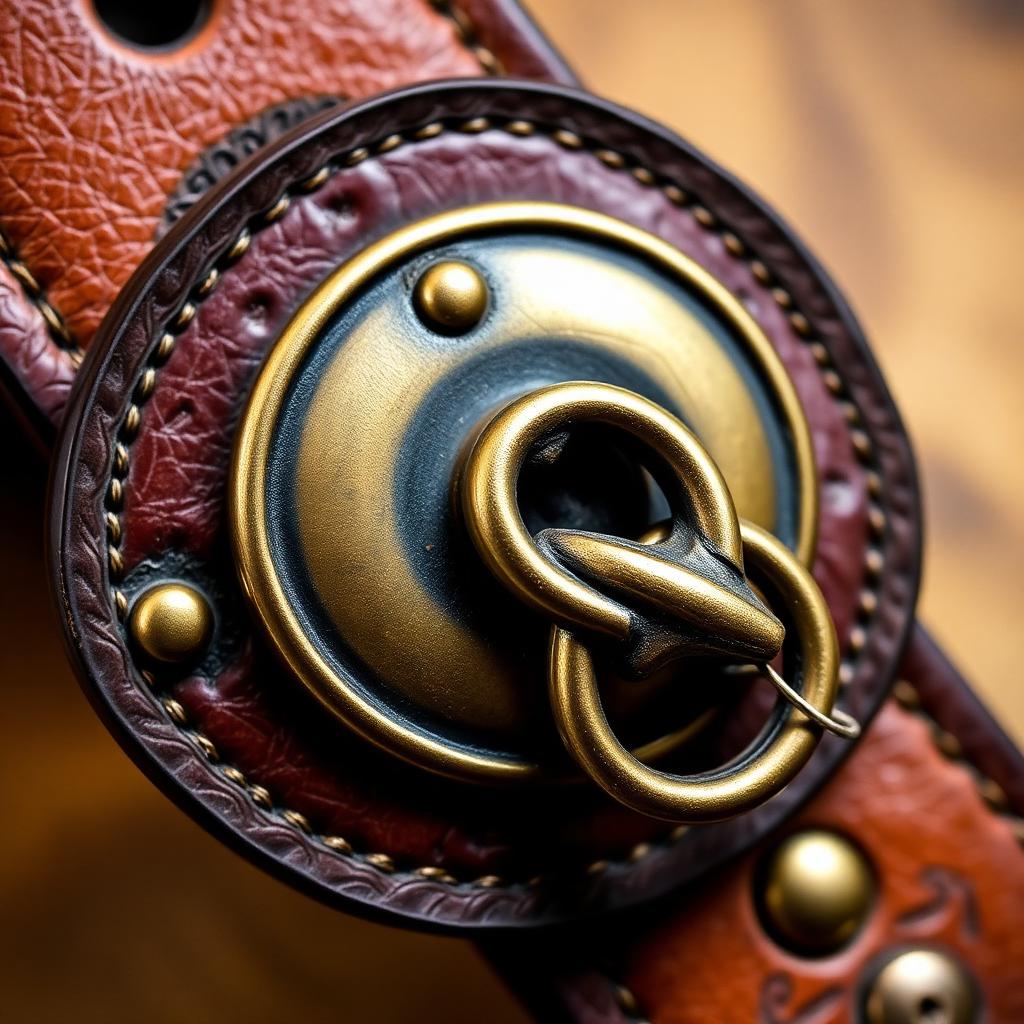
Western leather has its own hardware vocabulary. The two pieces that get confused most often are the screw-back concho and the D-ring anchor. Both mount to heavy leather, both use decorative faces, and both show up in the same suppliers' catalogs. They do fundamentally different jobs.
What each one is
Screw-back concho
A decorative round or shield-shaped brass or nickel-silver disc with a threaded post on the back. A small screw comes up through the leather from the flesh side and threads into the post, sandwiching the leather. Purely decorative — the concho does not carry load. Iconic on tooled belts, saddle skirts, headstalls, and hatbands.
D-ring anchor
A D-ring welded or riveted to a base plate that mounts to the leather with two or more rivets or Chicago screws. The D-ring carries load — this is where a strap, tie-down, or breast collar attaches. Structural, not decorative (though good ones are both).
Head-to-head
| Attribute | Screw-back concho | D-ring anchor |
|---|---|---|
| Primary role | Decoration | Load-bearing attachment point |
| Mounting | Single center screw | 2–4 rivets or Chicago screws |
| Load capacity | Zero (would tear leather at post) | 15–60kg depending on ring / rivets |
| Leather weight needed | 6–8oz minimum (to hold screw thread) | 8–10oz for real load |
| Serviceability | Swap in seconds with a screwdriver | Permanent once riveted |
| Typical Western uses | Belts, hatbands, headstalls, saddle skirts | Saddle rigging, breast collars, dee straps |
When to use a screw-back concho
- Decorative accents on tooled belts, saddle skirts, and headstalls.
- Customer-serviceable pieces where the buyer might want to swap conchos seasonally.
- Any spot where no strap or load attaches — pure ornament.
When you need a D-ring anchor
- Any place a strap, tie-down, or lead is going to be attached and loaded.
- Saddle rigging dees where a cinch or breast collar pulls.
- Dee straps on tack where snaps or trigger hooks will clip in — see our swivel vs trigger snap hooks guide.
- Any accessory D-ring on a heavy work belt for tools or keys.
Material and construction
Traditional Western hardware is nickel-silver (jewelers' bronze) or solid brass, often with hand-engraved faces from makers like MST Silversmiths or heritage suppliers listed by Weaver Leather Supply. Cast zinc "conchos" exist and should be avoided — they patina unevenly and the threaded post strips out under any real torque.
D-ring anchors should be solid brass or stainless steel with welded rings — see our cast vs forged vs stamped D-rings guide for the metallurgy breakdown that determines whether the ring survives a genuine pull.
Mounting rules
- Conchos: pre-punch a small pilot hole from the grain side, not a full-diameter hole. The screw should bite into leather fibers, not spin freely in a slot.
- D-ring anchors: always use two rivets or Chicago screws minimum, and back the leather with a reinforcement patch on the flesh side. A single rivet will rotate under load.
- Never a concho where you need an anchor. A concho loaded with a strap will tear out through the leather and often take the tooling with it.
Key takeaways
- Conchos are jewelry — single screw, no load, easy to swap.
- D-ring anchors are structure — multi-rivet mounting, real load capacity.
- Nickel-silver or solid brass only; avoid cast zinc conchos entirely.
- Anchors always get a reinforcement patch on the flesh side.
Continue your Western hardware research in the full D-rings, hooks and connectors category or see our related guide on choosing D-rings for straps.
Enjoyed this guide?
Browse more in D-Rings, Hooks & Connectors or share this article with another leather maker who'd find it useful.