How to Set Double Cap Rivets Cleanly Every Time
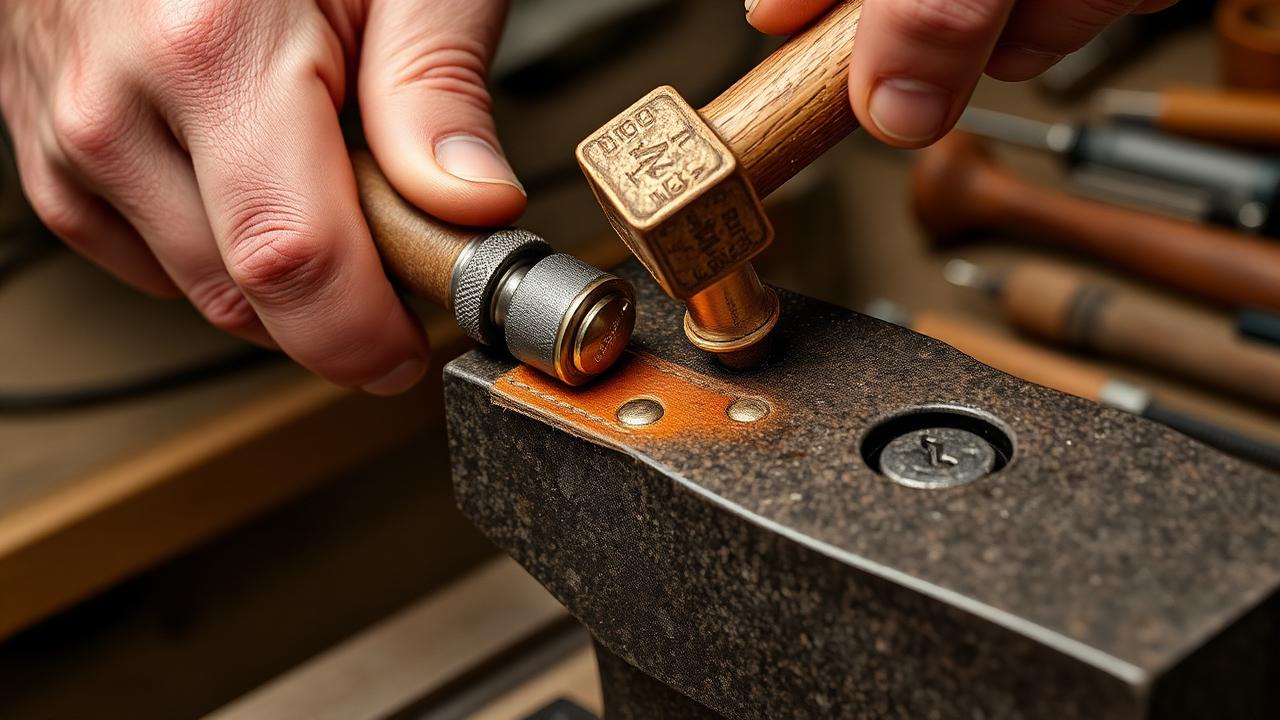
Double cap rivets are the workhorse fastener of modern leathercraft — strong, decorative, and quick. But the difference between a rivet that looks factory-set and one that looks beginner work is mostly technique, not luck.
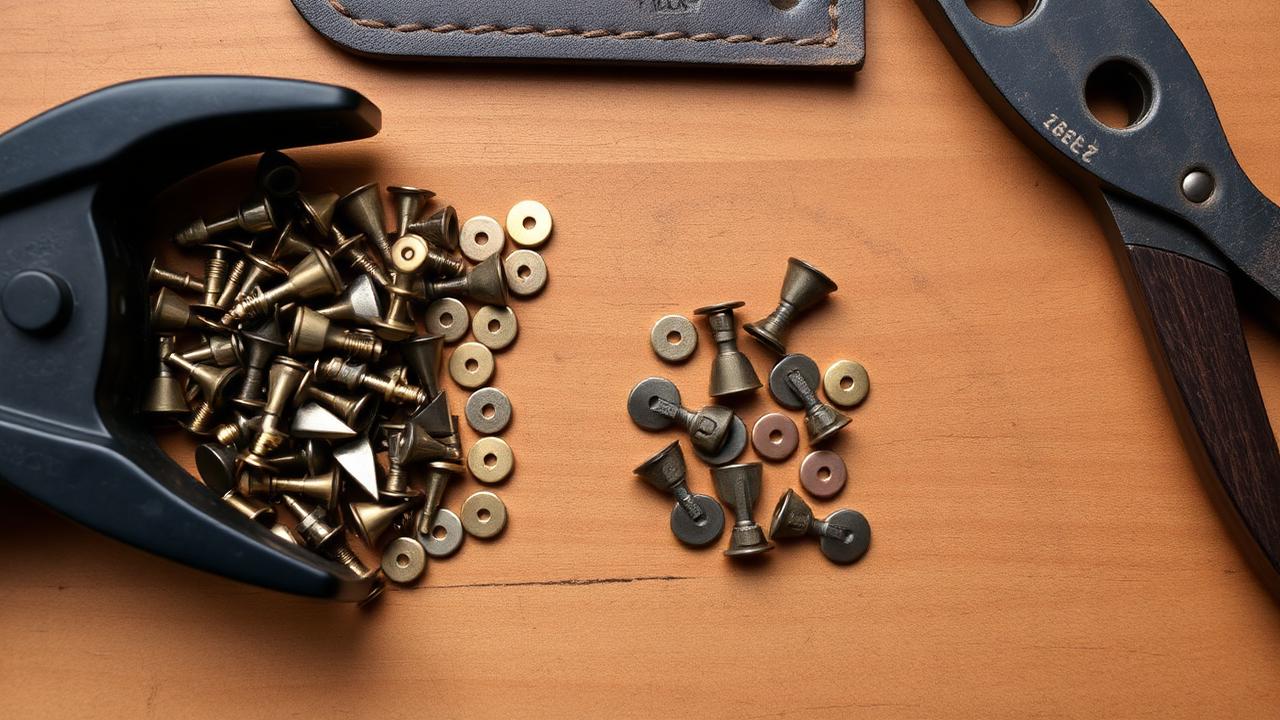
What you need
- Double cap rivets sized to your leather thickness (more on this below).
- A rivet setter matched to your cap diameter.
- A poly or granite anvil — never set rivets directly on a wooden bench.
- A 1.5mm or 2mm round punch.
- A mallet, ideally poly or rawhide, around 16–24oz.
Size your rivet correctly
The most common beginner mistake is choosing a post that's too long. The post should poke through your stacked leather by roughly 1.5mm to 2mm — just enough for the cap to grip when set. Too much excess and the post buckles sideways inside the cap. Too little and the cap pops off.
Stack your leather as it will be in the finished piece, measure the total thickness, and add 2mm. Match that to your rivet post length.
Step-by-step
1. Punch a clean hole
Use a punch slightly larger than the post — usually 2mm for standard 9mm cap rivets. A hole that's too tight forces the post off-center as you set.
2. Assemble dry first
Insert the post cap from the back. Press the front cap on by hand. Make sure the post is centered in the front cap and the leather lies flat.
3. Set on a hard surface
Place the rivet on your anvil, cap-down. Seat your setter on the front cap. Strike firmly — one solid blow is better than five timid taps. Timid blows let the post wander.
4. Inspect
A correctly set rivet has both caps fully seated against the leather with no gap, no tilt, and no visible post.
Common problems and fixes
The cap pops off
Post too short. Move up one rivet length.
The post bends sideways inside the cap
Post too long. Move down one length, or stack an extra layer of scrap leather to take up the slack.
The rivet sets crooked
Either your hole was too loose, you struck off-axis, or your setter wasn't seated squarely. Reset the setter, strike straight down.
The leather puckers around the rivet
You struck too hard with too long a post — the cap is crushing the leather. Smaller hole, shorter post.
Sizing chart
- Leather ≤ 2.5mm: 6mm post
- 2.5–4mm: 8mm post
- 4–6mm: 10mm post
- 6–8mm: 12mm post
Key takeaways
- Match post length to total leather thickness plus 2mm.
- Use a punch slightly larger than the post for clean alignment.
- Set on a hard anvil with one firm strike, not many soft ones.
- Diagnose every failed rivet — there's always a specific cause.
For deeper background on the hardware itself, see our category guide on rivets, snaps and fasteners.
Enjoyed this guide?
Browse more in Leathercraft Guides & Tutorials or share this article with another leather maker who'd find it useful.