Leather Hole Punch Size Chart: Matching Holes to Rivets, Snaps and Screws
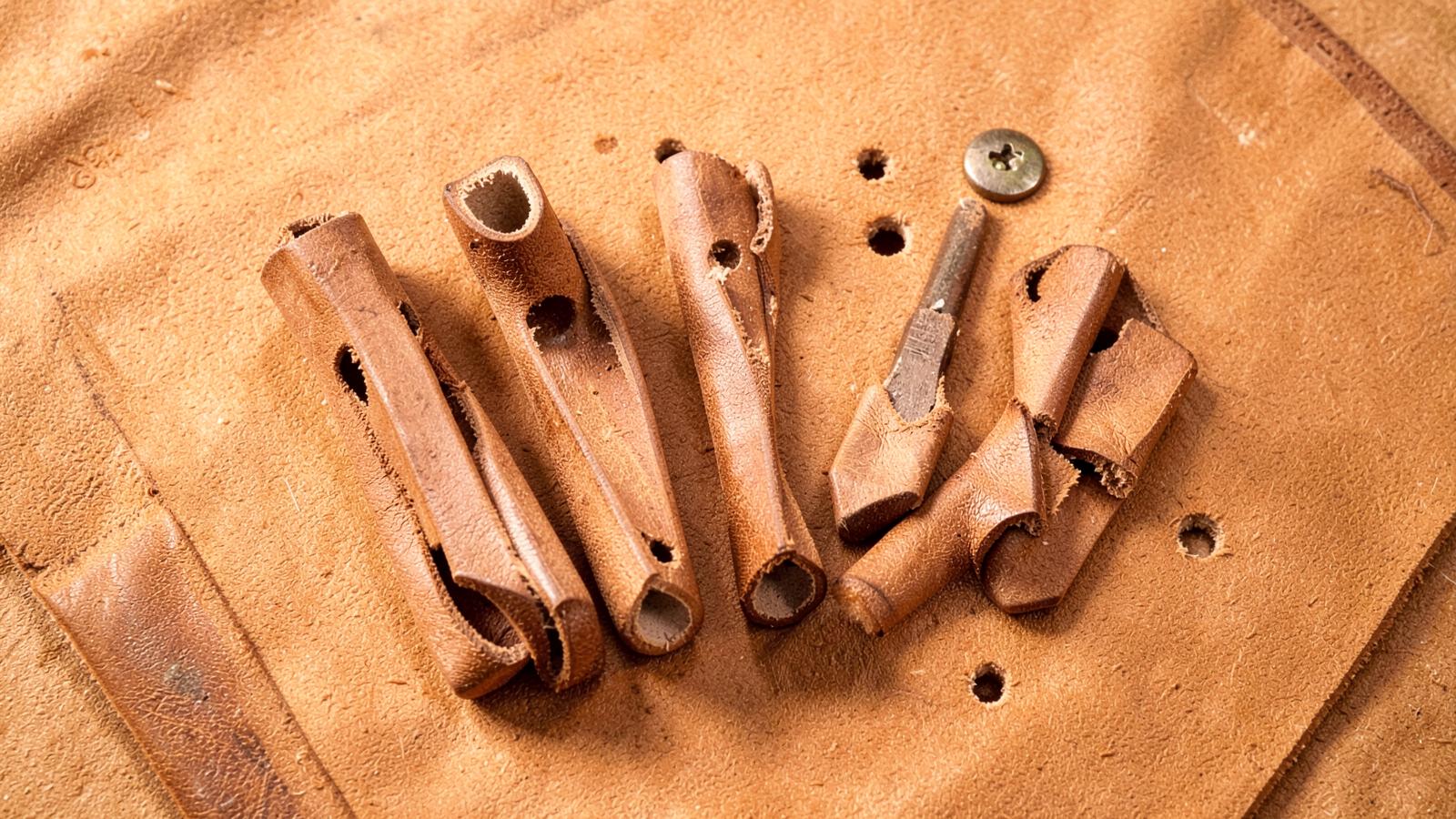
Hardware relies on interference fit. A rivet post, snap barrel or screw shank should pass through the leather with almost no slack, so the fibres grip the shaft and the hardware cannot rotate or work loose. Oversize the hole by 0.5 mm and no amount of setting force will save it.
Punch size chart by hardware type
| Hardware | Post / shank diameter | Punch size | Notes |
|---|---|---|---|
| Small double cap rivet (6 mm cap) | 2.5 mm | 2.0–2.5 mm | Start small; enlarge only if the post binds |
| Medium double cap rivet (9 mm cap) | 3.0 mm | 2.5–3.0 mm | Most bag and strap work |
| Large double cap rivet (12 mm cap) | 3.5–4.0 mm | 3.5 mm | Heavy straps, harness |
| Copper rivet #9 | 2.4 mm | 2.0 mm | Tight fit is essential for burr seating |
| Line 20 snap | 3.5 mm barrel | 3.0–3.5 mm | Cap side often needs 0.5 mm smaller |
| Line 24 snap | 4.0 mm barrel | 4.0 mm | Jackets, heavy flaps |
| Spring / ring snap | 3.0 mm | 2.5–3.0 mm | See spring vs Line snaps |
| Chicago screw (standard) | 4.0 mm | 4.0 mm | Loose fit lets the screw spin out |
| Eyelet #2 / grommet | 4.0 mm | 4.0 mm | Hole must equal barrel exactly |
| Belt holes | — | 4.0–4.5 mm | Oval punches look more refined |
| Lacing (kangaroo / calf lace) | — | 1.5–2.0 mm slit | Use a slit punch, not round |
Punch sizes: metric, imperial and gauge
| Metric | Inches (approx.) | Common punch number |
|---|---|---|
| 1.5 mm | 1/16" | #0 |
| 2.0 mm | 5/64" | #1 |
| 2.5 mm | 3/32" | #2 |
| 3.0 mm | 1/8" | #3 |
| 4.0 mm | 5/32" | #4 |
| 5.0 mm | 3/16" | #5 |
| 6.0 mm | 1/4" | #6 |
Punch numbering is not standardised between manufacturers, so always verify with a caliper rather than trusting the stamped number.
Rules that prevent loose hardware
- Undersize, then test. Punch a scrap first; a rivet that needs a firm push is correct.
- Punch through all layers together so holes cannot misalign.
- Poly board only. Wood and self-healing mats dull hollow punches quickly.
- Keep 6 mm edge distance minimum for any load-bearing hole.
- Strop the inside bevel with a tapered wooden dowel and compound to restore a clean cut.
Key takeaways
- Match punch to post diameter, then go 0.5 mm smaller if in doubt.
- Eyelets and Chicago screws are the exceptions — they need an exact match.
- Verify punch diameters with a caliper; numbering varies by brand.
FAQ
My rivet spins after setting. What went wrong?
The hole is too large or the post too long. Review rapid vs double cap rivets for post length selection.
Can I use a rotary punch for everything?
Rotary punches are convenient but limited to about 25 mm from an edge and tend to crush thick leather. Hollow punches are more accurate.
How do I keep punches sharp?
Punch only on polyethylene, keep them dry, and strop the inner bevel. Metallurgy background on tool steels is available from ASM International.
Conclusion
Correct hole size is invisible when right and obvious when wrong. Bookmark this chart and keep working through Leathercraft Guides & Tutorials.
Enjoyed this guide?
Browse more in Leathercraft Guides & Tutorials or share this article with another leather maker who'd find it useful.