Leather Thread Guide: Waxed Linen vs Polyester and How to Pick a Size
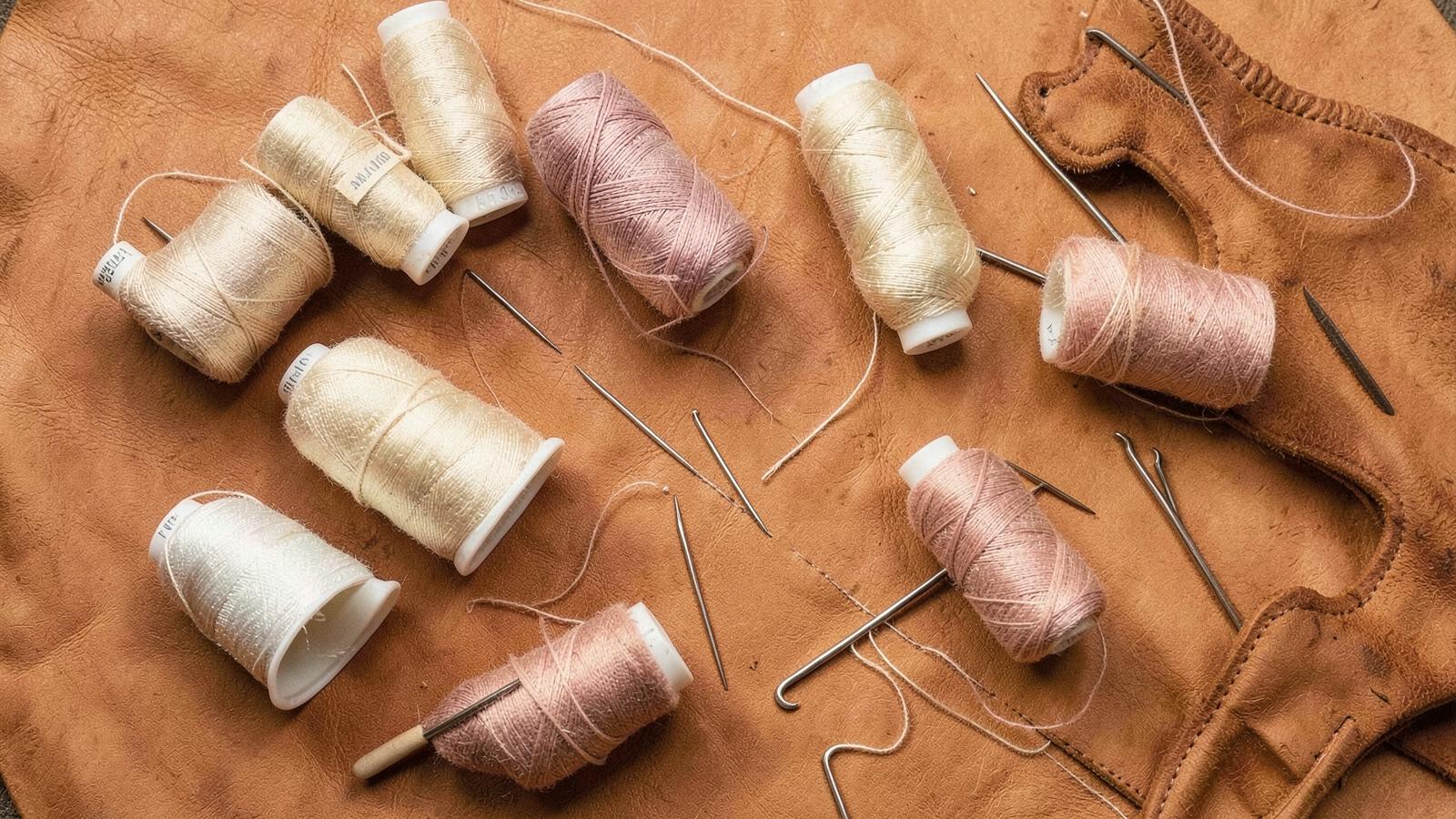
Two questions decide every thread purchase: what fibre, and what diameter. Fibre governs how the stitching ages; diameter governs whether the stitch line looks right at your chosen pitch. Most beginners get the fibre roughly right and the diameter badly wrong.
Linen vs polyester vs bonded nylon
| Waxed linen | Braided polyester | Bonded nylon | |
|---|---|---|---|
| Breaking strength | Moderate | High | Very high |
| Stretch | Almost none | Slight | Moderate |
| UV resistance | Good | Excellent | Fair — degrades in sunlight |
| Moisture behaviour | Swells, locks stitches tight | Unaffected | Unaffected |
| Look | Matte, traditional | Slight sheen | Sheen |
| Rot resistance | Needs wax | Excellent | Excellent |
| Best for | Heritage saddlery, veg-tan goods | Bags, straps, everyday goods | Machine sewing, outdoor gear |
For hand saddle stitching, waxed linen and braided polyester dominate. Linen for tradition and a matte look; polyester for outright durability and colourfastness. Bonded nylon belongs mostly in machines.
Thread size chart
| Diameter | Approx. Tex | Linen equivalent | Stitch pitch | Use |
|---|---|---|---|---|
| 0.35 mm | Tex 90 | 7-cord fine | 2.0–2.45 mm | Card holders, watch straps |
| 0.45 mm | Tex 135 | 18/3 | 2.45–3.0 mm | Wallets, small goods |
| 0.55–0.6 mm | Tex 210 | 18/4 | 3.0–3.85 mm | Bags, general purpose |
| 0.8 mm | Tex 400 | 18/5 | 3.85–5.0 mm | Belts, straps, totes |
| 1.0 mm+ | Tex 600 | 18/6 | 5.0 mm+ | Harness, saddlery, dog collars |
Rule of thumb: thread diameter should be roughly one-sixth of your stitch pitch. Thicker than that and the holes disappear under thread; thinner and the line looks starved. Match your chisel choice using our chisels vs pricking irons comparison.
Matching thread to leather thickness
| Total leather thickness | Thread diameter | Needle |
|---|---|---|
| Under 2 mm | 0.35–0.45 mm | Size 004 harness |
| 2–4 mm | 0.45–0.6 mm | Size 002 |
| 4–7 mm | 0.6–0.8 mm | Size 002 or 001 |
| Over 7 mm | 0.8–1.0 mm | Size 000 |
Wax, colour and practical details
- Pre-waxed vs unwaxed: pre-waxed linen is convenient; adding your own beeswax gives more grip and lets you control tack.
- Thread length per stitch: allow 3.5–4x the seam length for saddle stitching.
- Colour strategy: matching thread reads as refined; contrast thread reads as handmade — pick deliberately, not by accident.
- Storage: keep spools out of sunlight; UV degrades nylon fastest.
Fibre performance test methods for sewing threads are published by ASTM International.
Key takeaways
- Polyester for durability and colour; linen for a traditional matte finish.
- Thread diameter ≈ stitch pitch ÷ 6.
- Scale thread up with total leather thickness, not with project size.
- Cut 3.5–4x seam length for saddle stitch.
FAQ
Can I use ordinary sewing thread?
No. Domestic cotton or poly-cotton thread lacks the abrasion resistance to survive being pulled through leather holes and abrades away in months.
Does linen thread rot?
Only if unwaxed and kept damp. Properly waxed linen on well-cared-for leather lasts decades — much surviving antique saddlery proves it.
What thread for a belt?
0.8 mm polyester at 4–5 mm pitch. See the full build in how to make a leather belt.
Conclusion
Buy two diameters — 0.45 mm and 0.8 mm — and you can stitch almost anything well. More fundamentals in Leathercraft Guides & Tutorials.
Enjoyed this guide?
Browse more in Leathercraft Guides & Tutorials or share this article with another leather maker who'd find it useful.