How to Hand-Sew a Zipper Into Leather: A Step-by-Step Tutorial
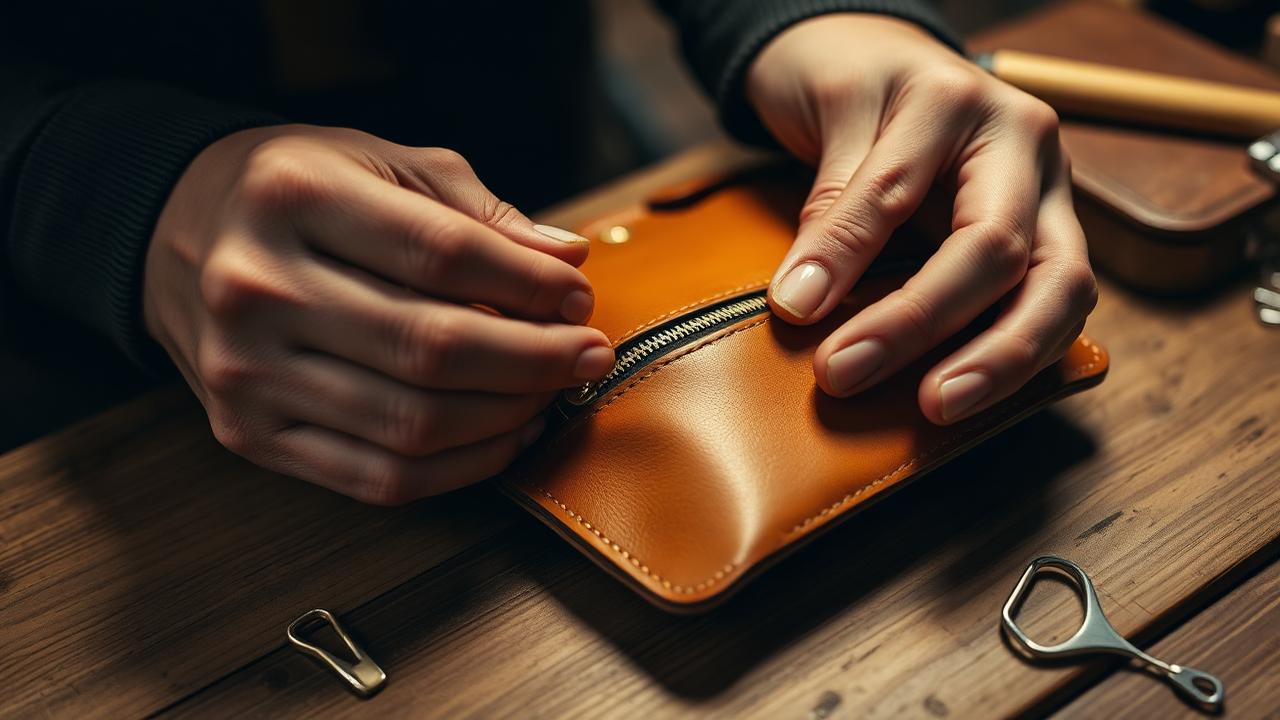
Setting a zipper into leather by hand looks intimidating, but it is mostly preparation. Ninety percent of a clean zipper install happens before the first stitch: choosing the right zipper, gluing it dead straight, and marking a stitch line you can actually follow. This tutorial covers the full sequence for a flat zipper pouch or bag panel.
What you will need
- Zipper: #5 coil or metal, at least 2 cm (0.8") longer than the opening. See our zipper size guide for gauge selection.
- Contact cement or double-sided leather tape (3 mm / 1/8")
- 3 mm or 4 mm diamond stitching chisel and maul
- Two harness needles and waxed polyester thread (0.6 mm for #5 zippers)
- Wing dividers or a stitch groover, rotary knife, cutting mat
- Bone folder, small binder clips
Step 1 — Pick a zipper that fits leather, not fabric
Garment zippers have narrow tape and light sliders. For leather, use a zipper with tape at least 12 mm (1/2") on each side of the teeth — you need room for a stitch line without crowding the coil. Coil zippers turn corners; metal zippers do not. Reverse coil hides the teeth and suits minimal designs (see reverse coil vs standard coil). YKK's own product reference lists tape widths per chain size.
Step 2 — Cut the opening accurately
Measure the zipper's usable length (top stop to bottom stop) and cut the leather opening 6–10 mm shorter on each end. That overlap gives the stops somewhere to hide. Cut with a fresh rotary blade against a steel rule — a wandering cut will telegraph through every stitch afterwards.
Step 3 — Glue before you stitch
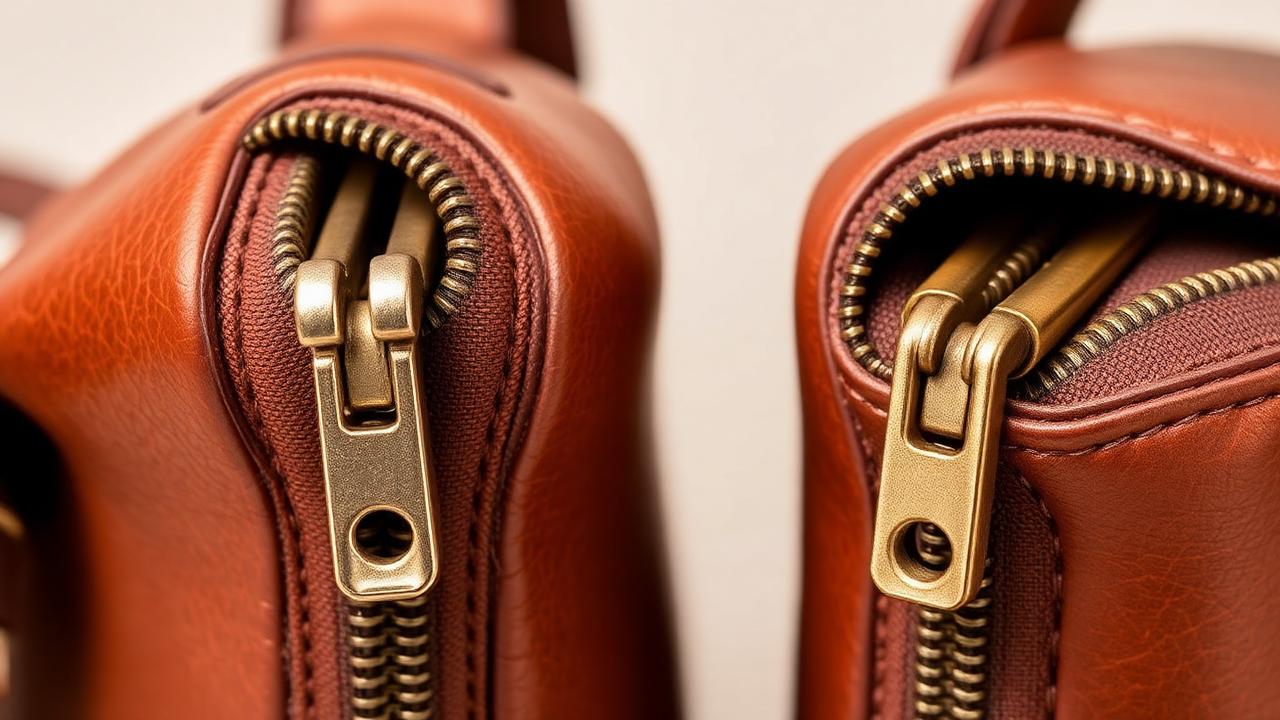
Apply a 5 mm band of contact cement to the flesh side of the leather along the opening and to the top of the zipper tape. Let both flash off until tacky (about 10 minutes), then press together working from the centre out. Double-sided tape is the beginner-friendly alternative — less repositioning stress, no fumes. Check that the teeth run parallel to the leather edge before the cement grabs; you get one attempt.
Step 4 — Mark and punch the stitch line
Set wing dividers to 3 mm from the edge of the opening and score a line the full length. Punch with a diamond chisel through leather and tape together, striking on a poly cutting board. Two rules: start punching from the centre of each side so the hole spacing stays symmetrical, and never punch through the coil itself.
Step 5 — Saddle stitch it in
Use a standard saddle stitch — our saddle stitching tutorial covers the hand motion in detail. Keep tension even; over-tightening on zipper tape puckers the polyester and makes the slider bind. Backstitch two holes at each end and bury the thread tails between layers.
Step 6 — Finish the ends
| End treatment | Best for | Difficulty |
|---|---|---|
| Leather zipper tab folded over the stop | Pouches, wallets | Easy |
| Tape folded 45° and tucked inside | Flat panels, laptop sleeves | Easy |
| Bound end with a lining strip | Bags with visible interiors | Medium |
| Boxed corner with metal stops | Dopp kits, duffels | Hard |
Common mistakes
- Stitching too close to the teeth. Below 2.5 mm the slider rubs thread and shreds it. 3–4 mm is the sweet spot.
- Skipping glue. Clips alone let the tape creep, and a 2 mm drift at the start becomes a visible wave at the end.
- Using thread too thick. 0.8 mm thread on a #5 zipper crowds the holes and warps the tape.
- Cutting the zipper before stitching. Trim excess tape only after the last stitch is locked.
Key takeaways
- Choose a zipper with at least 12 mm tape on each side.
- Glue first, punch second, stitch third — never freehand the line.
- Keep the stitch line 3–4 mm from the teeth.
- Coil turns corners; metal is for straight runs only.
- Plan the end treatment before you cut the opening length.
FAQ
Can I hand-sew a zipper into thick veg-tan?
Yes, up to about 2.5 mm (6 oz). Beyond that, skive the glue area down — see our skiving guide.
Do I need a zipper foot or machine?
No. Hand saddle stitching is stronger than a single-needle lockstitch because each hole holds two independent threads.
What if the slider sticks after installation?
Run a graphite pencil or paraffin along the teeth. If it still binds, your stitch line is too close and needs to be redone.
Conclusion
Hand-set zippers are a benchmark skill — once you can do one cleanly, pouches, dopp kits and interior pockets all open up. Browse more step-by-step builds in Leathercraft Guides & Tutorials.
Enjoyed this guide?
Browse more in Leathercraft Guides & Tutorials or share this article with another leather maker who'd find it useful.